Opener Repair for University Park's Older Garages in Allen

University Park, Allen

Opener Repair for University Park's Older Garages

Opener repair for University Park's 1980s-era garages, 19 miles out from our Allen shop. We know the hardware this housing stock still runs and what it takes to fix it right.

Serving Allen, TXBackground-checked techsHonest, upfront pricingFast local response

Local detail

What the Repair Takes

University Park is a small pocket compared to the rest of the area we cover - about 7,174 households, versus roughly 56,975 across the wider service territory. That size, and the age of the housing, shape how an opener call gets handled here.

  1. Routed as a dedicated trip

    That size matters for how the work shows up on our schedule: we're not running multiple opener calls a day in this one neighborhood, we're routing a truck 19 miles out from Allen for a specific job on a specific door. The call gets planned, not squeezed between closer jobs.

  2. Identify the opener generation

    Most of that territory was built between 1971 and 2015, but University Park itself is older, with a median year built around 1987. That means the opener hanging over most of these garages is not the same animal as a 2005-build opener elsewhere in the area, so a repair here usually starts with figuring out what generation of unit we're dealing with - chain-drive units from that era, older logic boards, sometimes a motor that's outlived two or three remotes.

  3. Diagnose and source the part

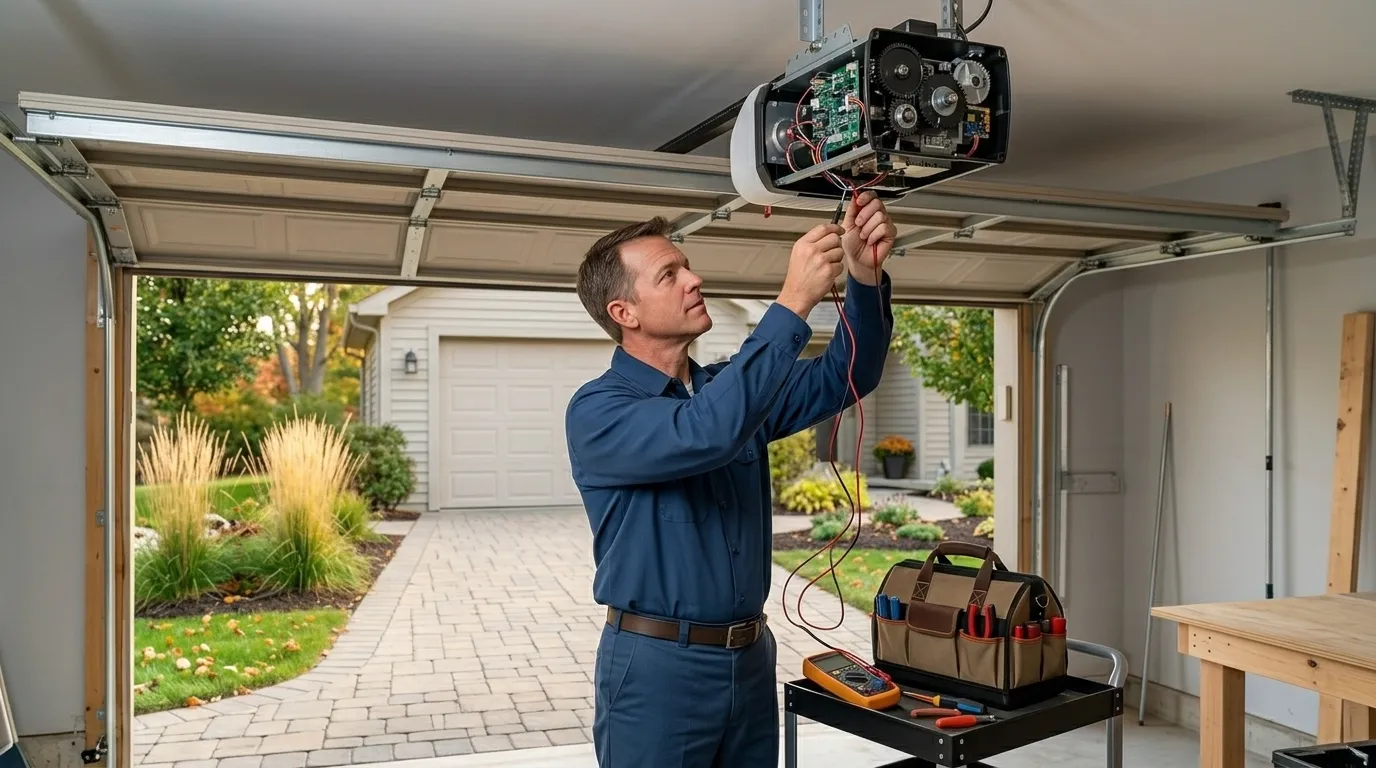
    The repair itself is the same core work anywhere: diagnose the failure point (motor, gear, board, sensor, or drive mechanism), source a part that still fits a 30-plus-year-old rail and bracket setup, and get the door moving safely again.

  4. Expect sourcing to add time

    Where it takes longer here is the sourcing - parts for a unit this old aren't always sitting on a shelf, and that's worth knowing before you schedule. Planning around part availability is the difference between a one-trip fix and a return visit.

The area

Can You Do This Yourself

Some opener fixes are genuinely within reach for most owners, and some turn into a teardown with no part waiting at the end. Here is where the line falls on a 1987-era unit.

Safe, low-risk fixes

If the opener just needs new batteries in the remote or the wall button's wiring came loose, that's within reach for most owners - cheap, low-risk, and no ladder work near the spring side of the door. Those are the fixes worth trying yourself first.

Where DIY stops

Where it stops being a DIY job is anything involving the drive gear, the logic board, or the safety reversal sensors. On a unit built around 1987, the gear kits and boards that would match it are often discontinued, which means a repair attempt can turn into a teardown with no replacement part waiting at the end.

The safety piece

There's also a safety piece: openers from this era predate a lot of the sensor and force-limiting standards built into newer units, so a botched adjustment can leave a door that doesn't stop when it should. That's not a risk worth taking on a heavy door.

The simple test

If you're comfortable with basic tools and the job is cosmetic - a loose bracket, a squeaky chain - go ahead. If the motor hums and doesn't move the door, or the board doesn't respond at all, that's a call, not a project.

What we find

What Causes It Around Here

With a median build year around 1987, a lot of University Park's openers are original or close to it - meaning they've been running for over three decades before anyone thinks to replace them. The common failures we see on units this age: worn drive gears (usually the first thing to strip on an aging chain-drive unit), capacitor failure on the motor, and logic boards that finally give out after years of heat cycling. The climate here runs moderate on heat exposure, but garages still see real swings - an attached garage on a hot afternoon holds heat well above outside temps, and that thermal cycling is hard on circuit boards and sensor eyes over 30-plus years. We also see a fair number of failed photo-eye sensors on these older units, since the alignment brackets loosen over time and the eyes aren't always the auto-reversing type installed on newer safety-code openers. None of this is unique wear-and-tear - it's just what happens to a mechanical device left running unattended for three decades.

What Causes It Around Here
What It Costs

How we work

What It Costs

We don't have a set price to quote you here - costs depend on whether the fix is a sensor, a gear kit, a board, or a full motor swap, and on whether we can still source a matching part for a unit this old. What we can tell you: with median household income in University Park sitting around $250,001, we see more owners here choose a full opener replacement over a patched repair once a unit hits a certain age, simply because sourcing discontinued parts for a 1987-era motor can cost close to what a new unit runs. That's a call worth making before, not after, we're standing at your garage with the cover off. Ask for a diagnosis first - we'll tell you straight whether it's a $20 sensor or a job that makes more sense as a replacement.

Good to know

What Can Go Wrong

The two things that go wrong on an opener this old are a part that no longer exists and a safety system that predates modern standards. Here is what each means for your repair, said plainly.

A part that's gone

The main risk on an opener this old is a part that simply doesn't exist anymore. If the motor housing or gear kit was discontinued years ago, we may need to source a compatible aftermarket part rather than an exact match, and that can add time to a job that would otherwise be quick.

The pre-1993 safety gap

There's also a safety issue specific to pre-1993 openers: units built before the federal auto-reverse mandate can lack modern photo-eye or pressure-sensing reversal, and a 1987-era opener sits right at that line.

When it's a replacement, not a repair

If yours doesn't reverse when something's under the door, that's not a minor fix - that's a replacement conversation, not a repair one. A door that won't stop for an obstruction is a safety failure, not a tune-up.

The limit we always flag

Being honest about it: we won't patch a safety system that doesn't meet current reversal standards just because the motor still spins. That's the one limitation we'll flag every time it comes up.

Time on the Job

Worth knowing

Time on the Job

Most opener repairs run under two hours once the truck is on-site - sensor realignment and board swaps are quick, gear kit replacements take longer if the rail has to come apart. The bigger variable for University Park specifically is the 19-mile run from Allen, which means the job gets scheduled as a dedicated trip rather than squeezed between calls in a tighter cluster. If a part isn't in the truck stock because it's matched to a 1987-era unit, that adds a return visit rather than extra time on the first one. We'd rather tell you that up front than promise a same-visit fix we can't back up.

Questions

Common questions

Why does University Park's opener repair take longer than a closer suburb?

Mainly two things: the drive out here is 19 miles from our Allen shop, so it's scheduled as its own trip, and the housing here dates to around 1987, older than most of the area we cover, so parts for the opener aren't always in standard truck stock.

Is my 1987-era opener safe to keep running?

It depends on whether it has proper auto-reverse. Openers built before the early-1990s federal mandate can lack modern photo-eye or pressure-sensing reversal. If yours doesn't stop and reverse when something blocks the door, that's a replacement issue, not something we'll patch.

Do you keep parts on hand for older openers like mine?

Not always. A gear kit or board matched to a unit from the late 1980s is often discontinued, so we may need to source a compatible part rather than an exact match. We'll tell you during the diagnosis if that's the case before starting work.

Should I repair or replace an opener this old?

We don't set a blanket rule, but once a unit is over 30 years old and a part needs sourcing rather than stocking, replacement often costs close to the same as the repair. We'll give you both numbers before we touch the unit.

Ready when you are

Need a garage door sorted in Allen?

Allen Garage Door Co repairs and installs garage doors, springs and openers in Allen, TX and the surrounding area.

CallGet a quote