Garage Door Cable Repair for Allen Homes in Allen

Allen, TX

Garage Door Cable Repair for Allen Homes

Frayed or snapped garage door cable in Allen, TX? We explain what a broken cable looks like, why it happens on 2000s-era homes, and what the fix involves.

Serving Allen, TXBackground-checked techsHonest, upfront pricingFast local response
1971–2015
Typical build years of local homes
2005
Median year homes were built
Upfront
Price agreed before work starts
17
Named areas in our coverage

Local detail

What You Are Seeing

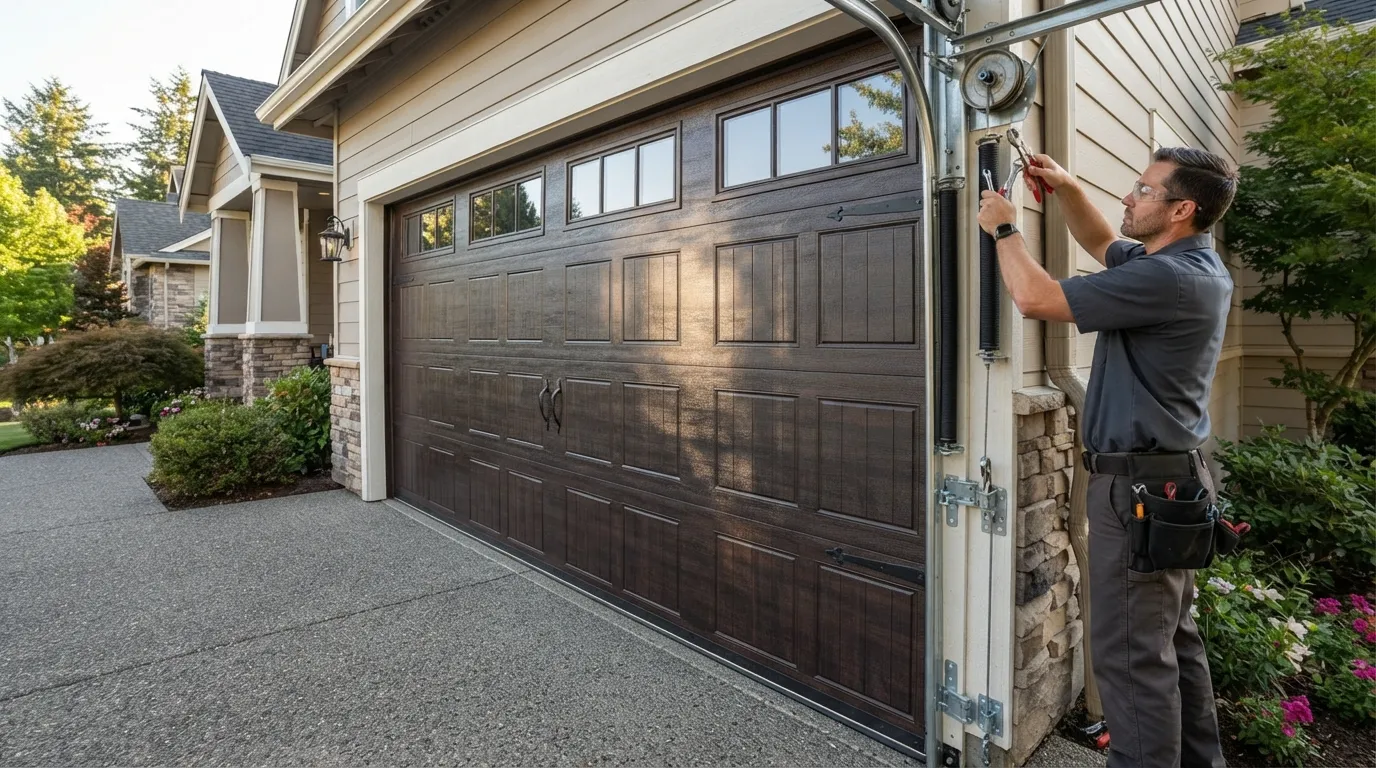
Telling a bad cable apart from a bad spring comes down to a few visible signs at the bottom corners of the door and the drums up top. Here is what a failing or snapped lift cable actually looks like on a typical Allen door, and why it is worth catching before it goes completely.

Crooked or dropped on one side

If your door is sitting crooked, hanging at an angle, or dropped hard on one side and won't budge, you're probably looking at a broken or frayed lift cable, not a spring. You'll often see one side of the door lower than the other because only one cable is still holding.

A curl of loose wire

Look at the bottom corners of the door and the drums up near the top of the track. A snapped cable usually leaves a curl of wire hanging loose where it came off the drum, which is one of the clearest signs you're dealing with a cable and not spring hardware.

2000s-era torsion hardware

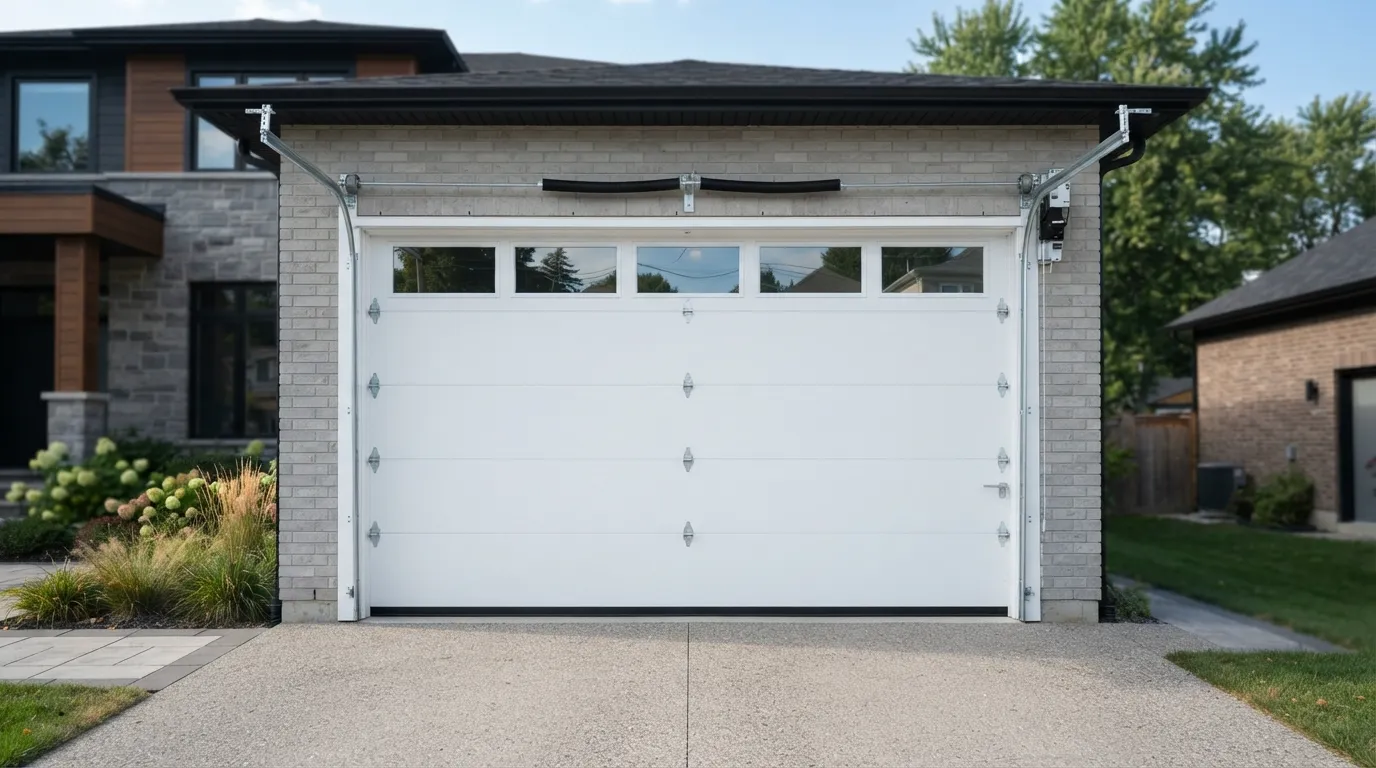
Most homes in this area were built between 1971 and 2015, with the median build year around 2005, which means the majority of doors run on standard torsion-spring hardware with steel lift cables running from the bottom brackets up to drums on the torsion shaft. That's true across the whole stretch of 2000s-era construction that makes up most of this service territory.

Rated cycles and rust

These cables are rated for a set number of cycles, and once the galvanized coating starts to go it's a matter of when, not if, one lets go. Usually you'll see rust spots or individual strands starting to separate near the drum end well before a full break.

Frayed vs. already snapped

A cable that's frayed but not yet broken is the safer time to call. A cable that's already snapped means the door is under uneven spring tension and shouldn't be forced up or down by hand until a tech has looked at it.

The area

Can You Do This Yourself

Straight talk before you reach for the toolbox: a cable job sits right next to a spring under heavy tension, so most of it isn't a safe DIY. Here's what to leave to a tech, what you can safely do in the meantime, and the one shortcut we won't recommend.

  1. Leave the tension to a tech

    Straight talk: don't attempt this one yourself. A garage door cable works in tandem with a torsion spring that's holding a lot of stored energy, and a cable job almost always means working near that spring, sometimes releasing and resetting tension on it. People get hurt doing this without the right winding bars and clamps, and a door that drops while you're under it doesn't give you a second try.

  2. Disconnect the opener

    One thing you can safely do yourself is unplug or disconnect the opener so it doesn't try to force a door that's stuck on a bad cable. Letting the motor fight a cable-failed door only risks more damage to the door and the opener itself.

  3. Don't pull on an uneven door

    Don't yank on the door manually if one side feels heavier than the other. That's usually a sign the remaining cable is doing double duty and could go next, and forcing it by hand is exactly when the second cable tends to let go.

  4. Skip the temporary patch

    Our honest limitation here - we don't recommend patching a badly frayed cable to squeeze out a few more months. Cable is cheap compared to the spring, drum, or track damage that follows if it snaps under load and the door racks sideways in the opening. If you're seeing fraying, it's worth having it replaced before it becomes an emergency call.

What we find

Time on the Job

No two cable jobs take exactly the same time, and the honest answer to how long depends on what we find at the door. Here's what actually drives the timeline, what else we check while we're in there, and why we quote on site rather than over the phone.

What sets the timeline

How long a cable repair takes depends on a few things we can't answer without seeing the door: whether it's a single or double door, and whether both cables need replacing or just the failed one. Each of those changes the amount of work involved.

Collateral hardware damage

We also check whether the drums or bottom brackets got damaged when the cable let go. A clean break caught early, with hardware still in good shape, is a more straightforward job than one where the door dropped and bent a track or chewed up a roller on the way down.

Springs checked too

We check the springs while we're in there. On a torsion system, a cable failure sometimes points to a spring that's past its cycle life too, and replacing one without checking the other just means a second call later.

Worn drums get swapped

If the drums show wear grooves from the old cable, those get swapped as well rather than reused. Reusing a grooved drum just wears the new cable prematurely, so it isn't worth saving.

On-site answer first

We don't quote a fixed turnaround here because it varies door to door. But we'll tell you on site, before any work starts, exactly what we're looking at and what it involves.

How we work

What Causes It Around Here

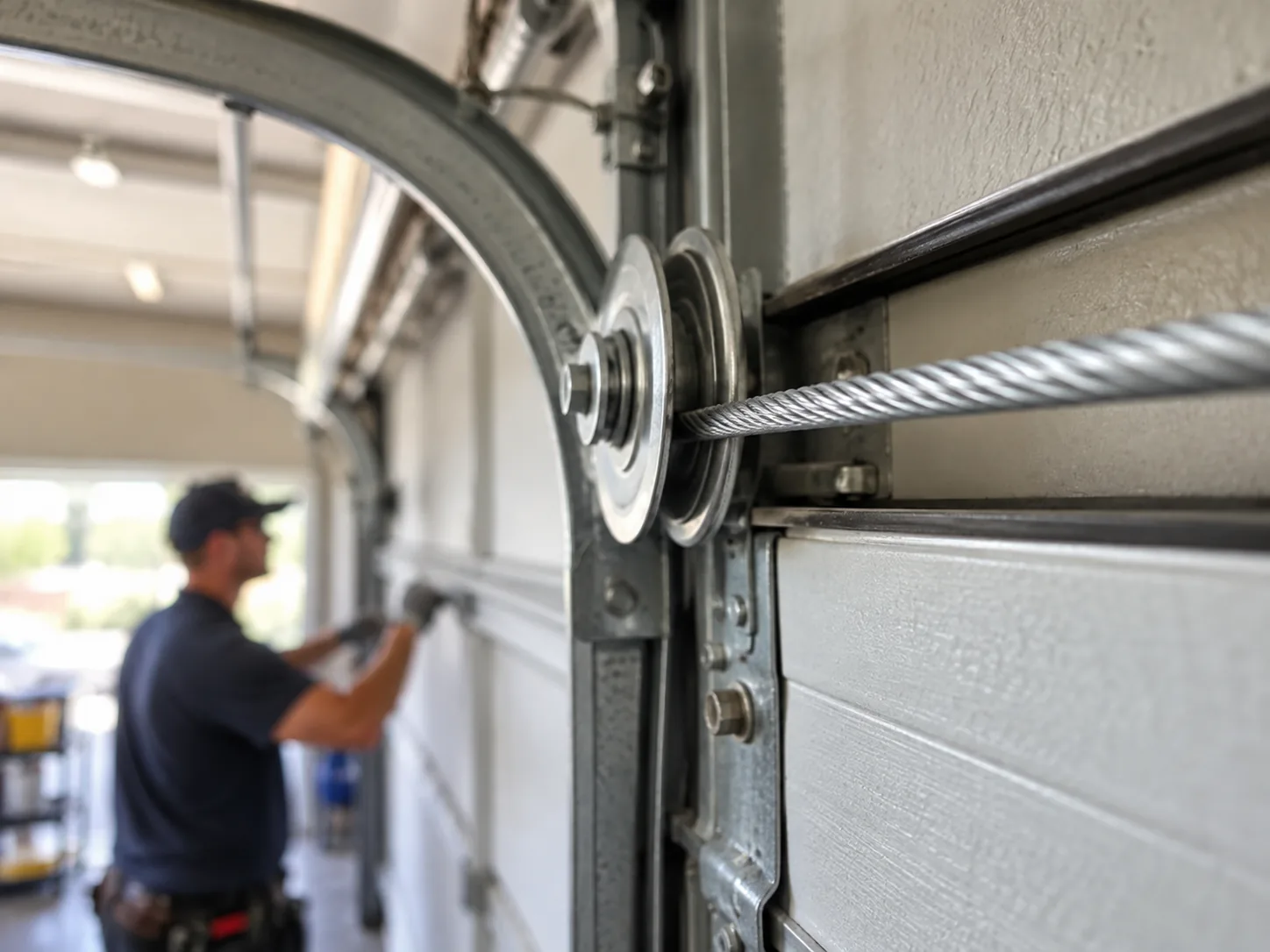
Two things drive cable failure in this area more than most: age of stock and heat. With most houses built between 1971 and 2015 and the median sitting around 2005, a large share of doors in this service territory are old enough now that original cables are reaching the end of their rated cycle count. That 2000s-era construction pattern repeats across the 17 named areas that make up this territory, so it's not one neighborhood - it's the general age of the housing.

Allen sits in a moderate-heat climate band, and repeated summer heat cycles dry out the factory lubrication on a lift cable faster than in a cooler climate. Dry cable rubs against the drum groove instead of sliding, and that friction is what starts the fraying you can see with the door open. Garages that get direct afternoon sun on the door side see this a little sooner than shaded ones, though we don't have exact numbers to say by how much.

Heavier doors - insulated steel, or anything with a lot of glass panel weight - put more load on the cable to begin with, so those tend to show wear before a lighter single-layer door of the same age.

What Causes It Around Here

Questions

Common questions

Is a broken cable the same as a broken spring?

No. A spring provides the lifting force; the cable is what actually connects the door to the drum and carries it up and down the track. A broken spring usually makes the door feel impossibly heavy but the door still sits level. A broken cable makes the door drop unevenly or hang crooked because one side has lost its connection.

Can I just replace one cable and leave the other?

We generally replace both at the same time. They're under the same tension and installed at the same time originally, so if one has frayed to the point of failure, the other is usually close behind. Replacing just one means a return trip a few months later for the second.

Why did my cable snap with no warning?

Cable wear is usually gradual - fraying strands, rust at the drum - but it can be hard to spot from the ground with the door closed. By the time you notice the door hanging crooked, the cable has often already been deteriorating for a while unseen.

Ready when you are

Need a garage door sorted in Allen?

Allen Garage Door Co repairs and installs garage doors, springs and openers in Allen, TX and the surrounding area.

CallGet a quote