
Hums but won't move
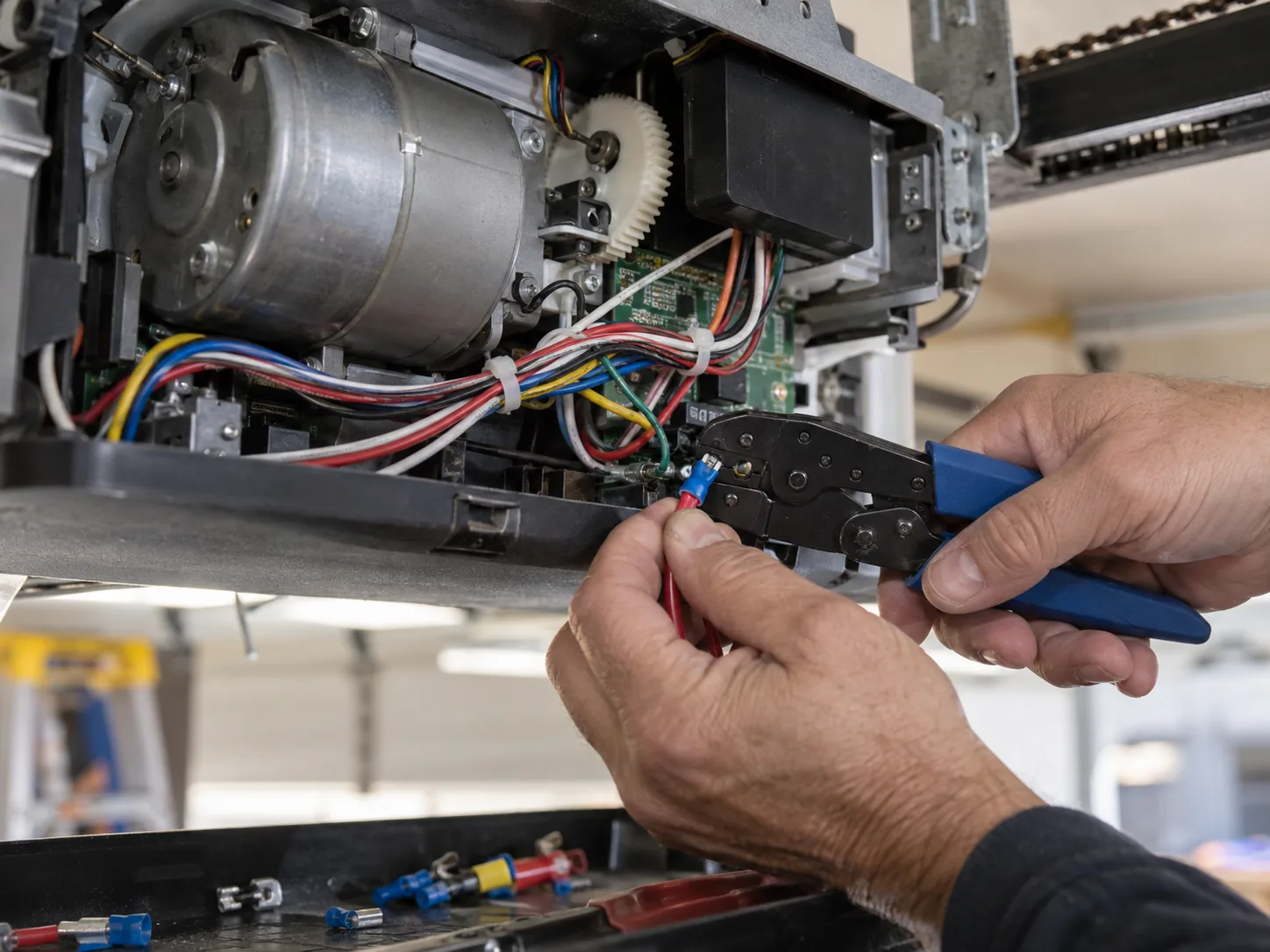
An opener that hums but the door doesn't move is almost always a stripped gear or a slipped drive belt, not the motor itself. The motor is doing its job - it's the part that transfers that motion to the door that has failed.
Allen, TX
Opener grinding, reversing, or dead on arrival? Allen Garage Door Co explains what's failing, what you can check yourself, and why this hits Allen homes so often.
Local detail
Across the 56,975 households and 36,095 owner-occupied houses in this service area, the opener failure we see most is age-related wear on belt and chain drives installed when the house was built or when a prior owner replaced an aging unit. The symptom looks electrical; the cause is almost always mechanical. Here's how the common ones show up.
An opener that hums but the door doesn't move is almost always a stripped gear or a slipped drive belt, not the motor itself. The motor is doing its job - it's the part that transfers that motion to the door that has failed.
If the door reverses halfway up or refuses to close, look at the safety sensors first - a stray cobweb or a knocked-loose bracket near the floor will do it. It reads like an opener fault when it's often just a blocked or misaligned eye.
Chain-drive units that have gone loud, with a rattle that gets worse over months, usually need a sprocket or a tension adjustment before the chain jumps the rail entirely. The noise is the early warning, well before the chain actually comes off.
A remote that works from three feet away but not from the driveway points to a dying wall button or a logic board losing its memory, not a battery. Swapping the battery won't fix a receiver that's on its way out.
An opener that runs the motor but never engages the carriage is a classic sign of a worn drive gear - a $20 part that a lot of people pay for a full unit replacement to fix. Knowing the difference can save you the cost of an entire opener.
The area
A surprising share of opener problems come down to the sensors, which is genuinely homeowner territory. Past that, the board, gear housing, and the door's balance are where DIY starts costing you twice. Here's the safe line and when replacement beats repair.
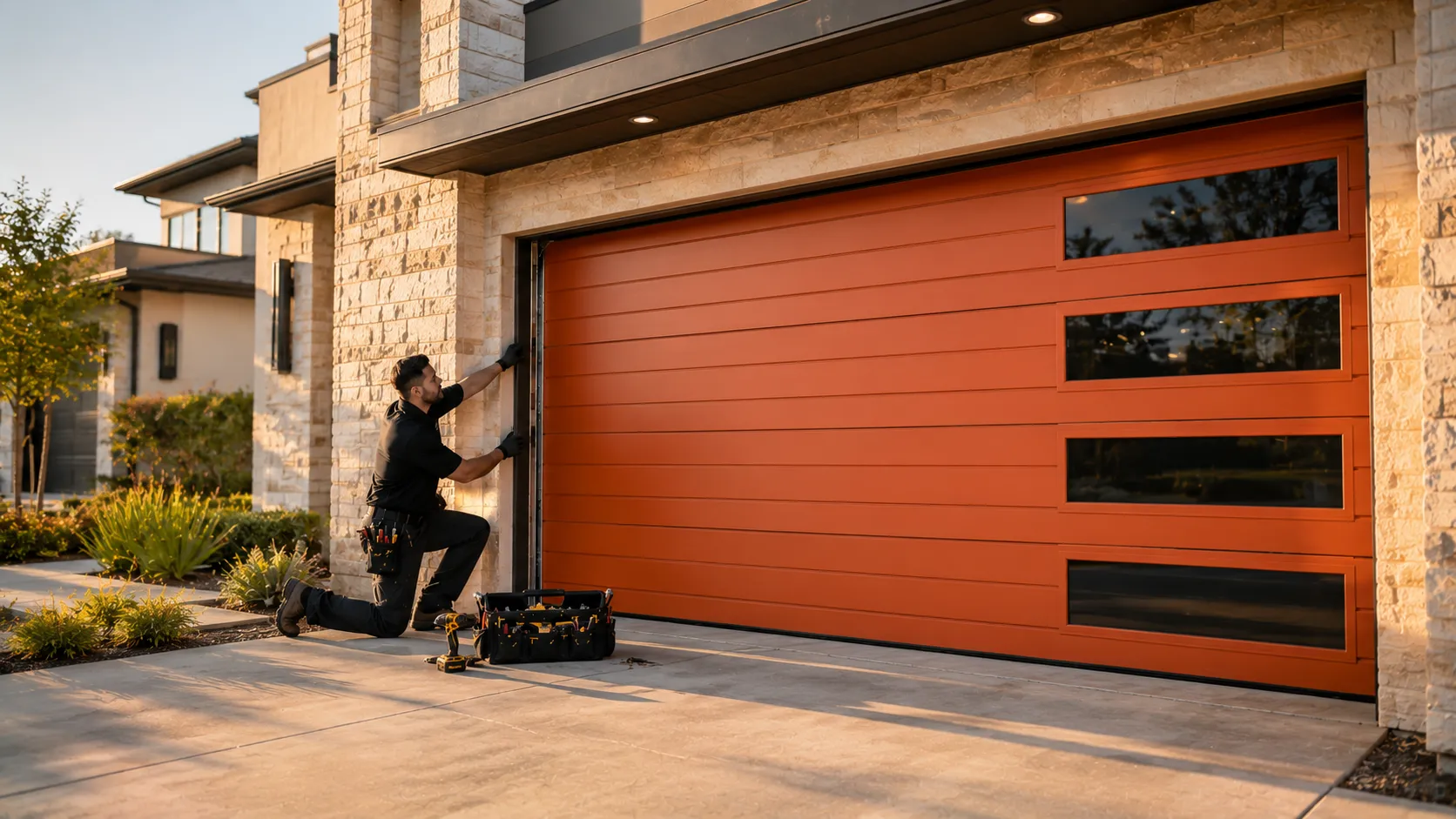
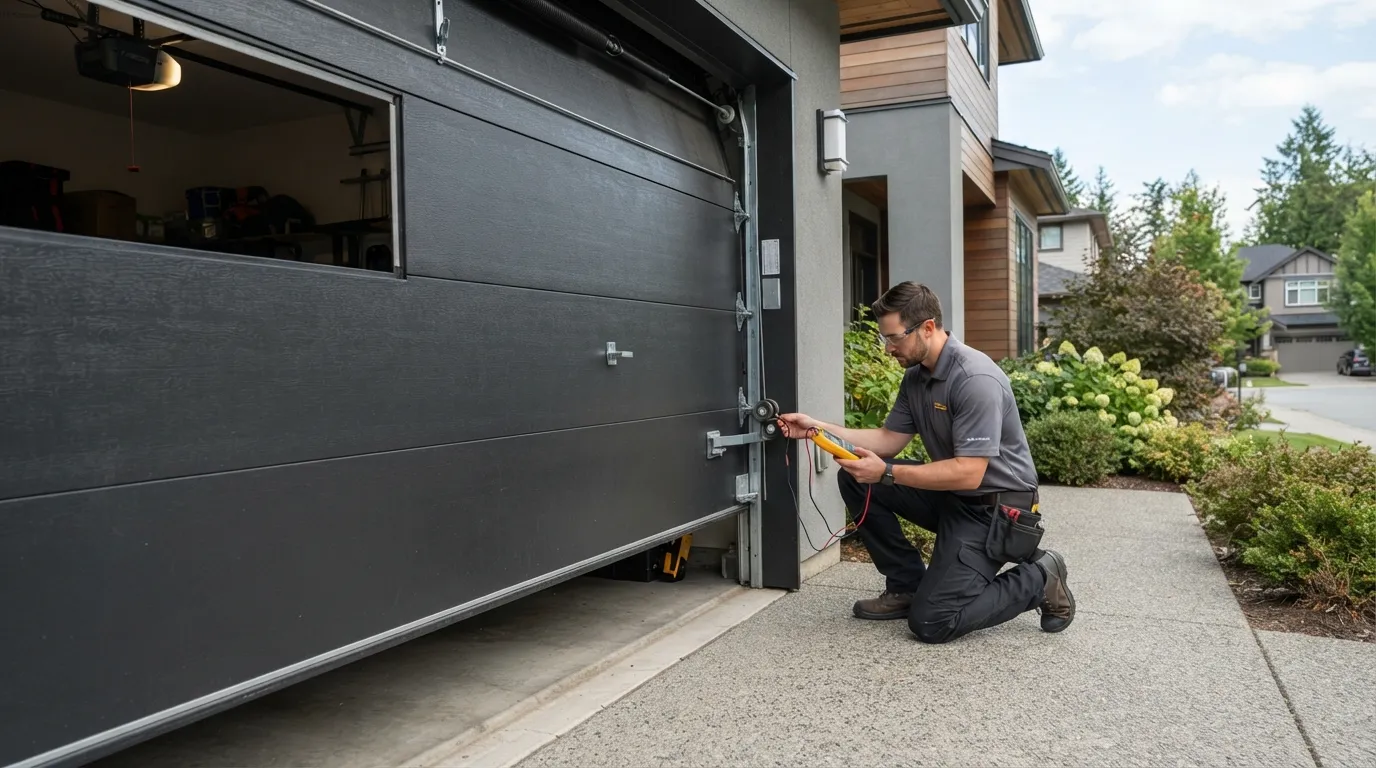
Sensor alignment is fair game for a homeowner - two LED eyes facing each other across the floor, both lit steady, no blinking. Wipe the lenses, check they're not knocked out of level, and you've fixed a large share of "door won't close" calls without a tool in your hand.
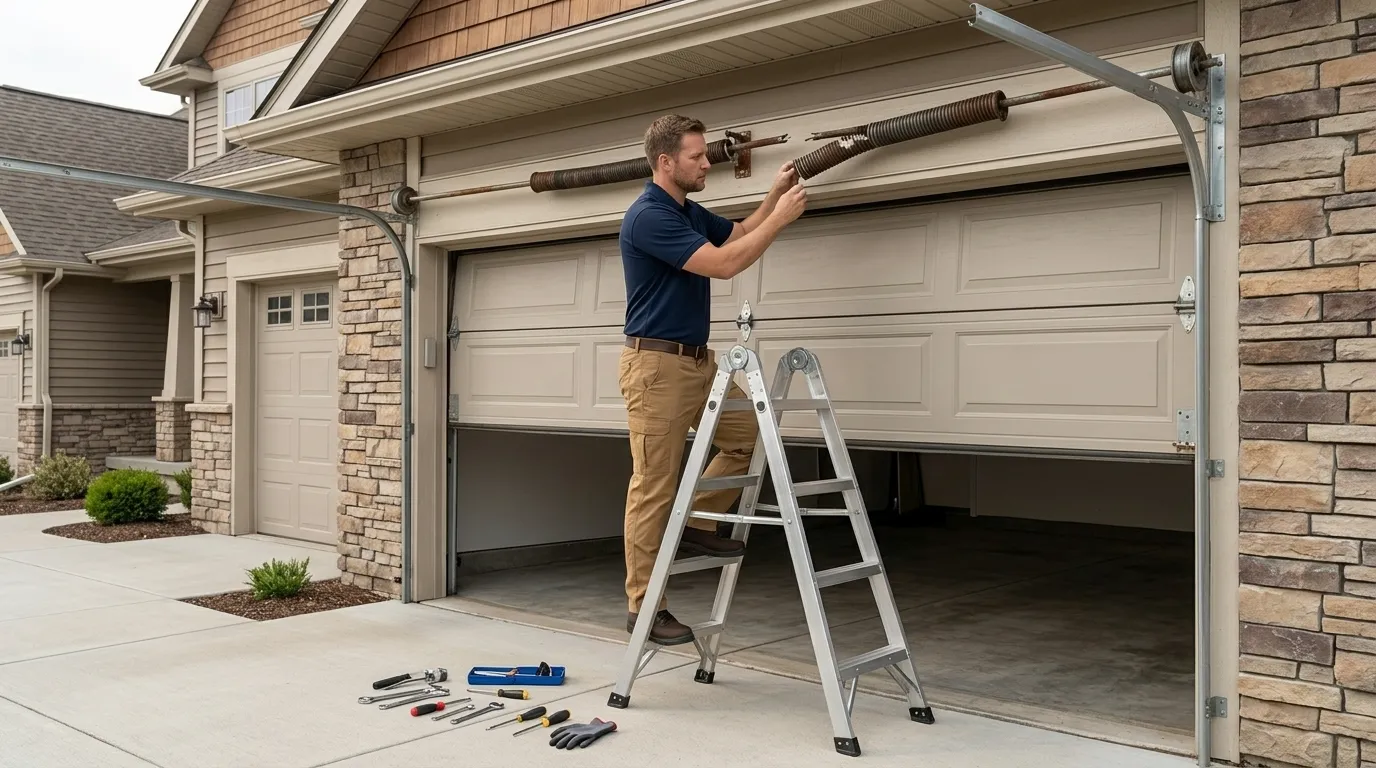
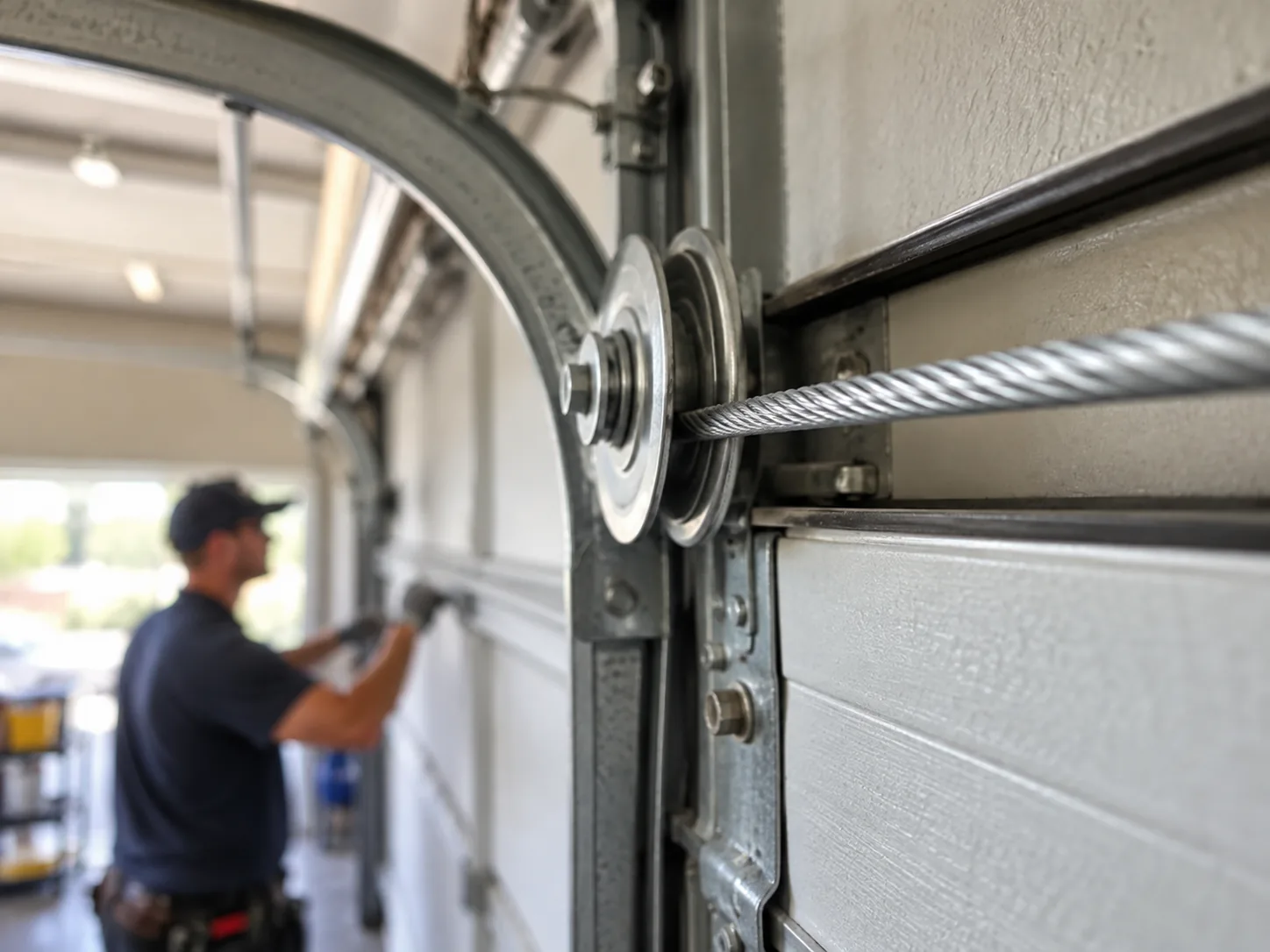
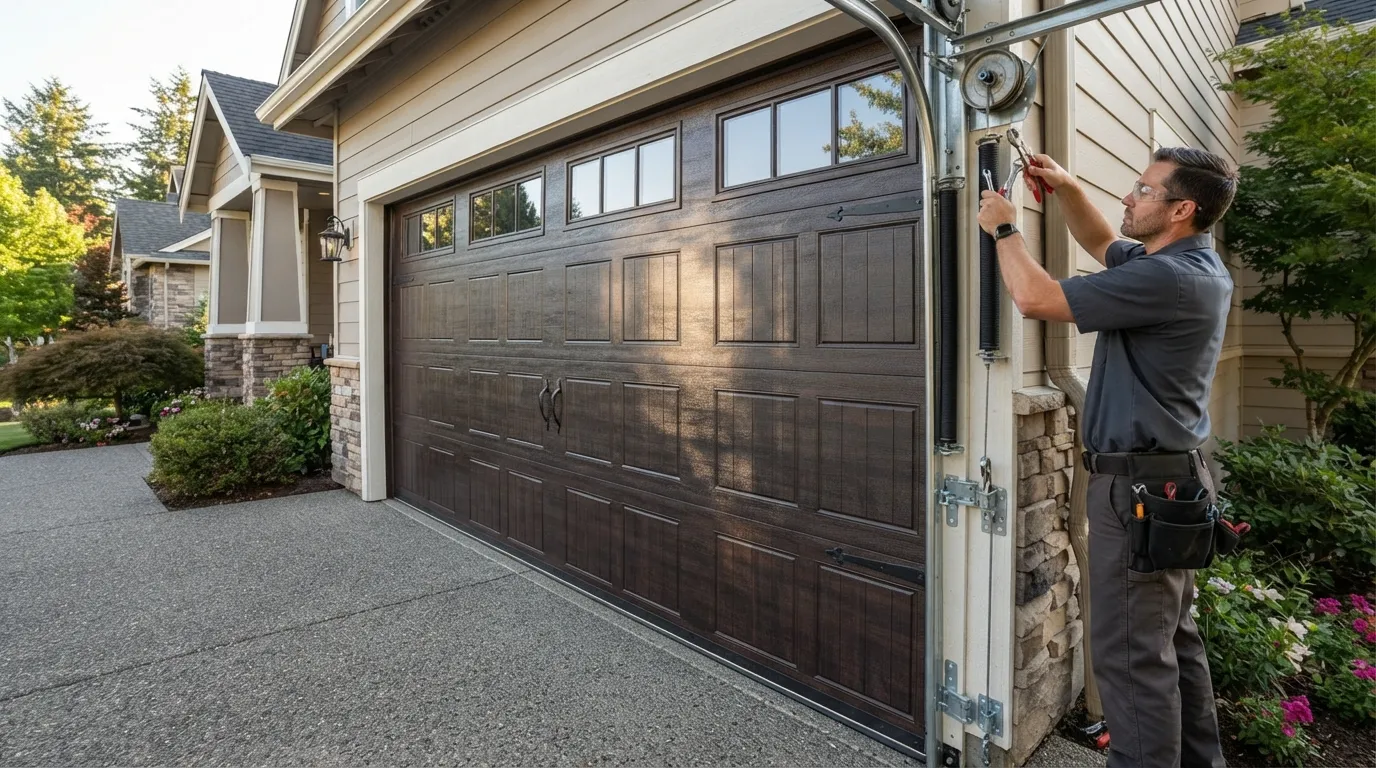
What we don't recommend touching is the logic board, the drive gear housing, or anything involving the high-tension spring system the opener works against. These are the parts where a wrong move turns a small fault into a bigger, more expensive one.
Openers are built to move a door that's already balanced correctly. If the door itself is heavy, off-track, or the springs are shot, an opener repair on top of that will fail again in weeks, and you'll have paid twice. The door has to be right before the opener repair will hold.
One honest limitation: if your opener is more than 15 years old and the circuit board has failed, we usually recommend replacement over a board swap. Parts for older logic boards are getting harder to source, and a new unit with better safety sensors often costs about the same as the repair once labor's added in.
What we find
Most opener work is wrapped up in a single visit, but a full replacement and a proper load test add time for good reason. Here's what's quick, what takes longer, and why we won't call a job done on an empty run.
Most opener repairs - gear replacement, sensor realignment, remote reprogramming, chain tension - are same-visit work. These are the common calls, and the parts for them ride on the truck.
A full unit swap takes longer because it includes mounting the new rail, wiring the wall control, and testing travel limits and force settings so the door doesn't slam or stall. It's several distinct steps, not just bolting a new motor in place.
We test under load, not just on an empty run. A door that closes fine with nothing resisting it can still bind if the force setting is off, which shows up the first time a leaf or a stray toy gets in the way. That's a five-minute adjustment done right, and a callback if it's skipped.
How we work
Housing in this service area went up mostly between 1971 and 2015, with the median build year around 2005, and that matters for openers specifically. A house built in the early 2000s is now old enough that its original chain or belt-drive opener - installed new, not replaced - is 20 years into a part that's rated for roughly 10,000 to 15,000 cycles a year of use. That's exactly the age band where gears strip and boards fail.
Across the 17 named areas that make up this stock, the pattern repeats: garages built to the same era code, openers installed once and never serviced, now aging out in the same few years. The moderate heat band here doesn't cook openers the way a true desert climate does, but garage temperatures still run well above the house, and heat is hard on the plastic gear and the lubricant inside an opener housing that's rarely serviced.
With a median household income of $110,357 in the area, most owners are replacing rather than nursing along a unit that's already been repaired once. We see very few opener failures on doors installed since 2015 - this is a problem tied to the older third of the housing stock, not the newest.
Questions
Chain and belt drives stretch slightly over time, and once they're loose enough, they slap the rail on every open and close. It's a tension fix, not a sign the motor is failing, and it's one of the fastest repairs on the truck.
Often not on its own. If the unit's original to a house from that era, the board and gear are near the end of their rated life anyway. We'll tell you honestly if a repair is a stopgap or a real fix before we touch anything.
Usually the wall button or the receiver antenna inside the unit, not the remote itself. Weak signal shows up as intermittent, not total, failure. We test the receiver directly rather than guessing from the remote.
Explore more
Ready when you are
Allen Garage Door Co repairs and installs garage doors, springs and openers in Allen, TX and the surrounding area.