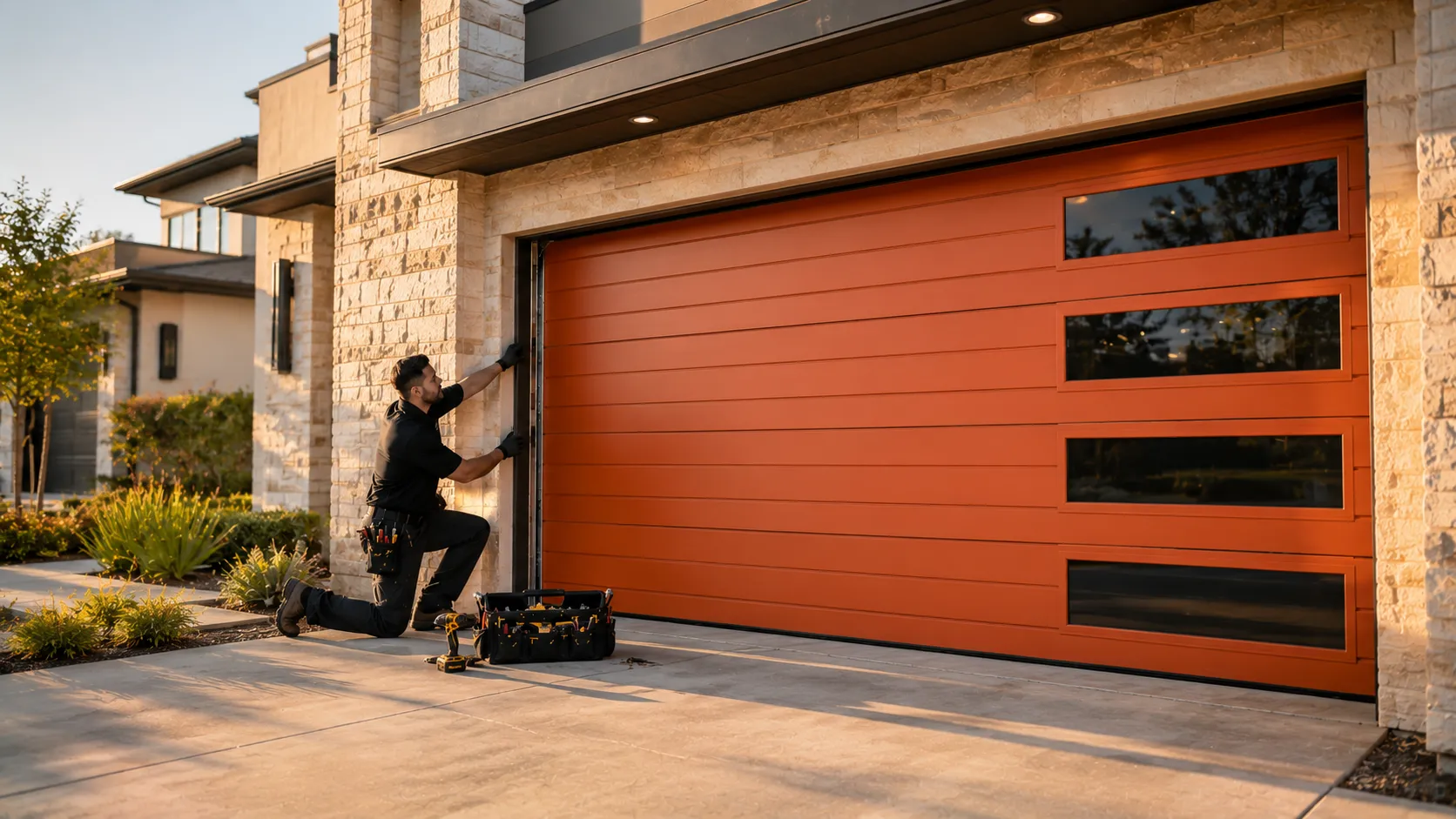
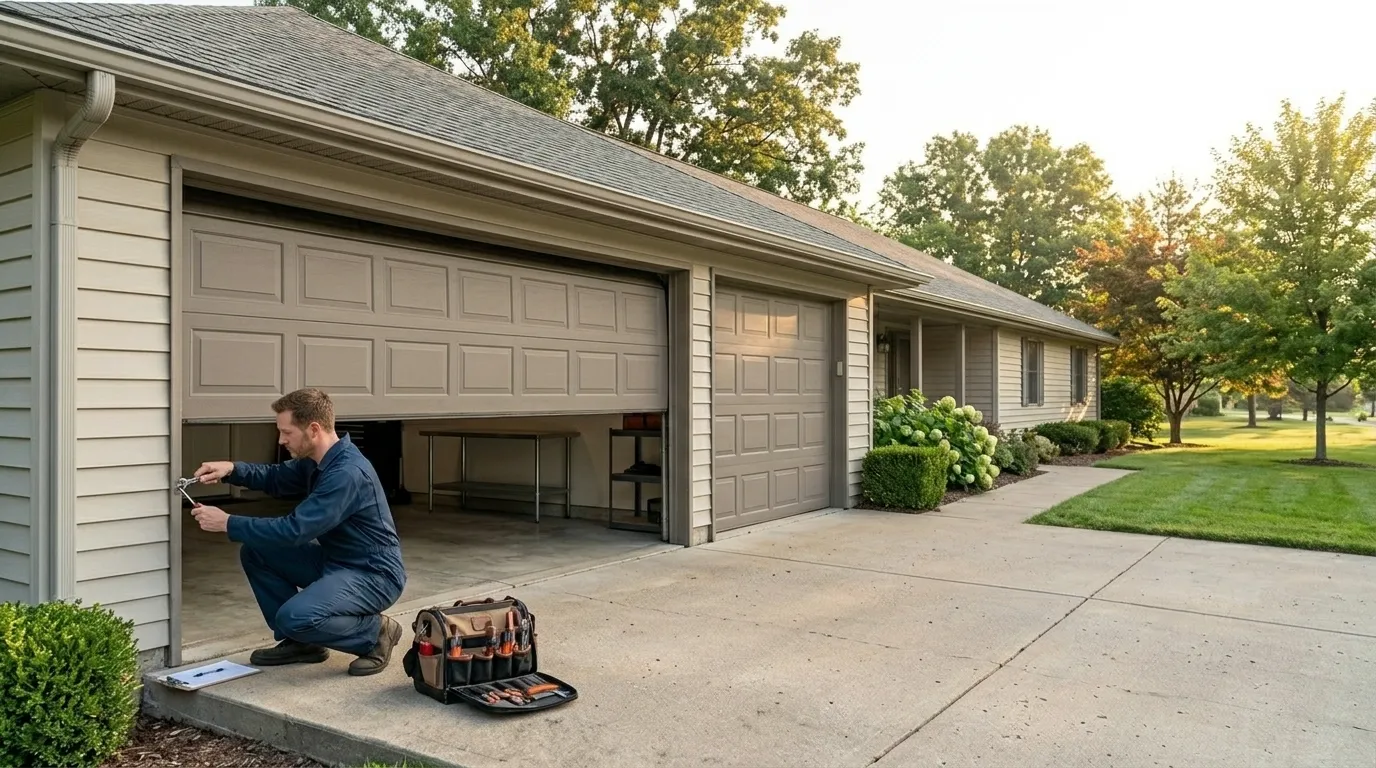
Garage Door Spring Repair Across Allen, TX in Allen

Allen, TX

Garage Door Spring Repair Across Allen, TX

Torsion and extension spring repair for homes across the Allen, TX service area, where 2000s-era builder springs are hitting the end of their cycle count.

Serving Allen, TXBackground-checked techsHonest, upfront pricingFast local response
1971–2015
Typical build years of local homes
36K
Owner-occupied homes in the area
57K
Households in the area
1 visit
Most repairs finished same visit

Local detail

What You Are Seeing

A door that suddenly won't move is far more often a spring than an opener, and the break is usually visible once you know where to look. Here's how a failed torsion or extension spring shows up, and why so many Allen doors are reaching this point at once.

Won't lift - look above the door

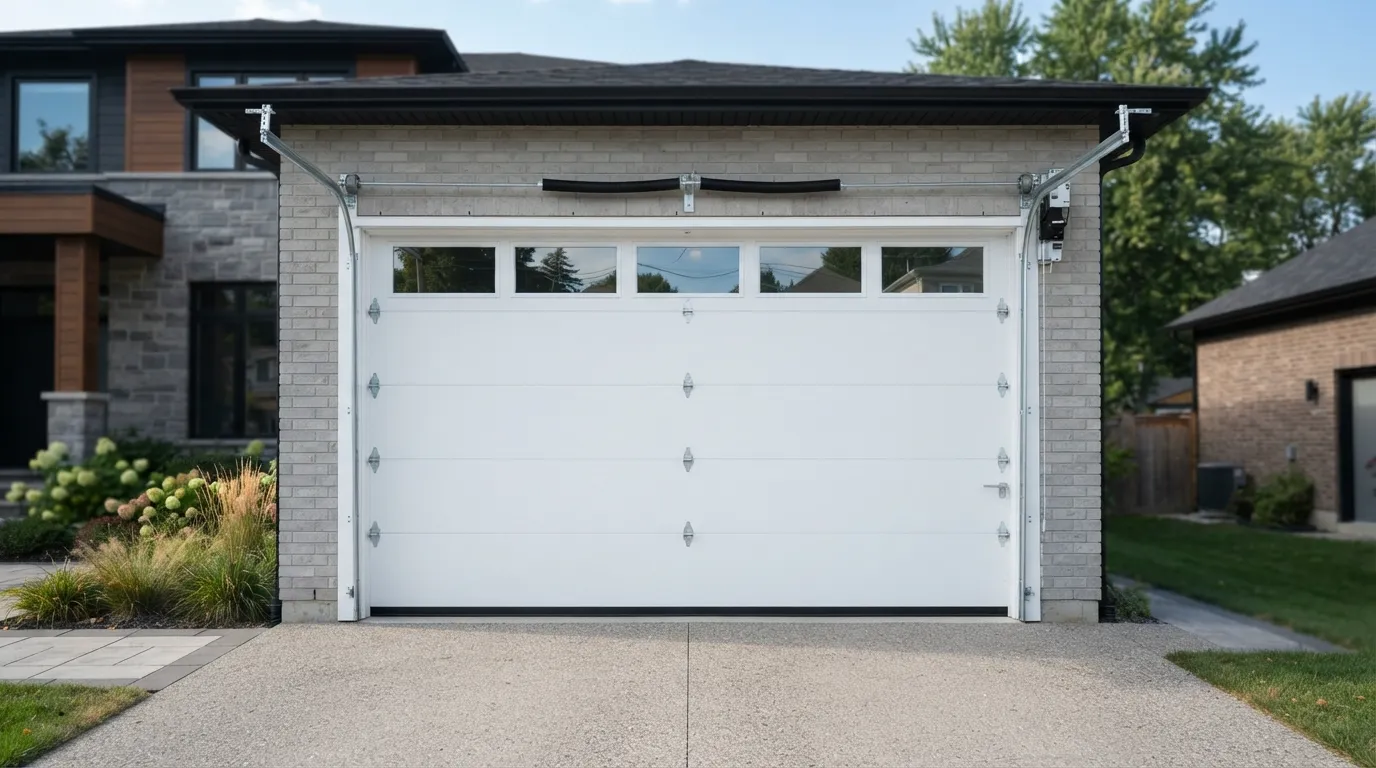
A door that won't lift, or lifts a few inches and stops, is almost always a broken spring, not a broken opener. Look above the door: if you see a torsion spring split in two along the coil, with a gap where the metal snapped, that's your answer.

Extension springs snap differently

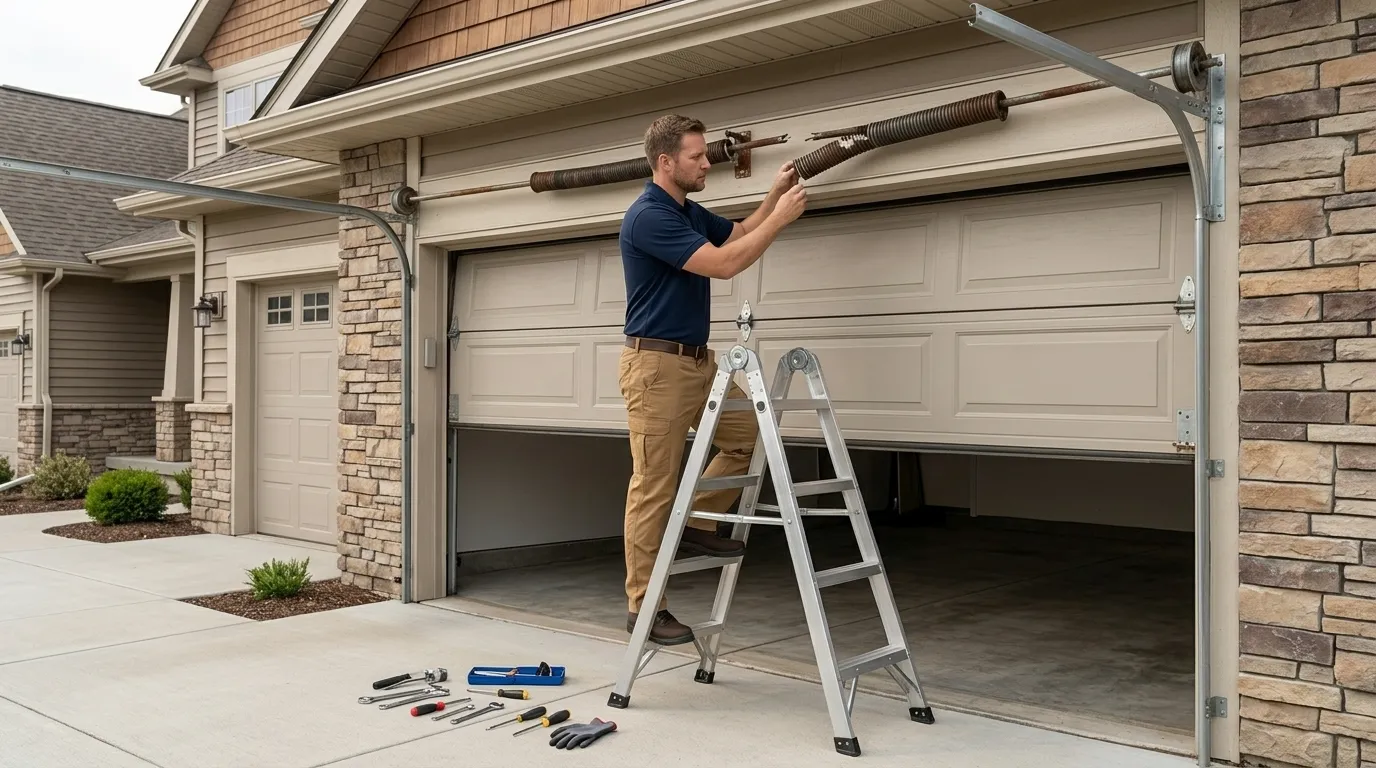
On older extension-spring setups, the pair of springs runs along the horizontal tracks instead of above the door, and a snapped one usually shows a loose, unwound coil hanging to one side. Knowing which system you have tells you where to look for the break.

The door drops and bangs

The door may also drop hard and fast if the cable comes off track once the spring lets go, since the spring is what carries almost all the weight, not the opener motor. If you hear a loud bang from the garage, that's usually the spring failing, not a shot heard elsewhere in the house.

Original 2000s builder springs

Most houses here were built between 1971 and 2015, with the heaviest concentration going up during the 2000s across the 17 named areas we cover. A lot of doors still run the original torsion spring the builder installed, and that spring has a lifespan measured in open-close cycles, not years. Once it's near the end, it doesn't slow down first - it just goes.

The area

Can You Do This Yourself

The spring is the one part of this door that can genuinely injure you, so most of this section is about what to leave alone. Here's the honest line between safe inspection and the tension work that belongs with a tech.

  1. Don't touch the torsion spring

    We'll say it straight: a torsion spring is wound under enough tension to break a wrist or worse if the winding bars slip, and the tools most homeowners own aren't the right ones for it. This isn't a project we recommend as a weekend job, and it's the one repair on this door where we'd rather you call than watch a video.

  2. Extension springs you can inspect

    Extension springs, the kind running along the horizontal tracks, are a bit more forgiving to inspect but still under load. You can safely check whether a cable has jumped its pulley or whether a spring has visibly separated, and that tells you what you're dealing with before anyone shows up.

  3. Disconnect the opener

    Confirm the door is disconnected from the opener - pull the red release cord - so nobody tries to run the motor against a broken spring and burns it out. Running the opener against a failed spring is one of the fastest ways to turn one repair into two.

  4. Leave the door down

    Leave the door down, keep the car out of the way, and don't try to muscle it open by hand repeatedly. Repeated forcing is what turns a spring job into a spring-and-track job.

What we find

Time on the Job

A single-door spring swap is usually same-visit work, but the job is more about matching the right spring than turning a wrench. Here's what sets the timeline, when a parts wait is honest, and why we won't put a close-enough spring on your door.

Single door, same-visit

A straightforward torsion spring replacement on a single door is a same-visit repair once the right spring is on the truck. It's the most common version of this call, and the one most likely to be finished in one stop.

Matching the spring takes judgment

Matching the wire size, coil diameter, and wind direction to the existing hardware is the part that takes judgment, not the wrench work itself. Two springs on a double door, or a spring paired with damaged cables or a bent shaft, adds time to the job.

Why a part wait can happen

We don't stock every spring size for every door built in this area between 1971 and 2015, since manufacturers changed spring specs more than once over that stretch. Most jobs run from a standard stock, but a nonstandard door, especially anything custom-sized or older than the 2000s wave of construction, can mean a short parts wait.

We won't force a mismatch

That's the honest limitation here: we'd rather order the correct spring than force a close-enough one onto your door, because a mismatched spring wears the opener and the track faster than no spring at all. Getting the spec right is what makes the repair last.

Secured either way

We'll tell you on the visit whether your door is a same-day fix or a next-day one. Either way, the door gets safely secured in the meantime so it's not sitting open or unbalanced.

How we work

What Causes It Around Here

Springs fail from cycle count, not calendar age, and the 2000s building boom that put up most of the housing stock across this service area means a large share of doors are now well into the range where original springs give out. A house built in 2005, the median year for construction here, has had roughly two decades of daily door cycles on the same coil.

Climate plays a smaller role here than in colder regions. This area sits in a moderate-heat band, so we don't see the extreme cold-snap failures that show up further north, where metal contracts hard overnight. Instead, springs here wear out the ordinary way: thousands of open-close cycles, sun and heat cycling the coil, and the slow metal fatigue that comes with a decade or two of daily use.

With 56,975 households and 36,095 owner-occupied houses spread across the towns we serve, the pattern repeats block by block. A neighborhood built in one construction wave tends to have springs failing in the same rough window, which is why some streets seem to have a run of garage door calls the same season.

What Causes It Around Here

Questions

Common questions

How do I know if it's the spring or the opener that failed?

Disconnect the opener using the red release cord and try lifting the door by hand. If it feels heavy, won't stay up, or drops on its own, the spring is gone and the opener was never the problem. If it lifts easily by hand, the issue is likely the opener or its gears, not the spring.

Can I just replace one spring on a double torsion setup?

You can, but we don't recommend it. The other spring is usually close behind on cycle count, and running one new spring against one worn one puts uneven load on the shaft and cables. Most jobs on a double door end up replacing both at once for that reason.

Do you carry every spring size on the truck?

Not every size. Standard torsion and extension springs are usually in stock, but older or nonstandard doors, especially anything outside the typical 2000s-era builder spec, can mean a short parts wait. We'll tell you upfront if your door needs an order.

Is a broken spring an emergency?

It's not a fire-and-flood emergency, but it does make the door unsafe to force open or closed. Leave it disconnected from the opener and closed if possible, and get it looked at soon so the cables and track don't take on extra wear from an unbalanced door.

Ready when you are

Need a garage door sorted in Allen?

Allen Garage Door Co repairs and installs garage doors, springs and openers in Allen, TX and the surrounding area.

CallGet a quote