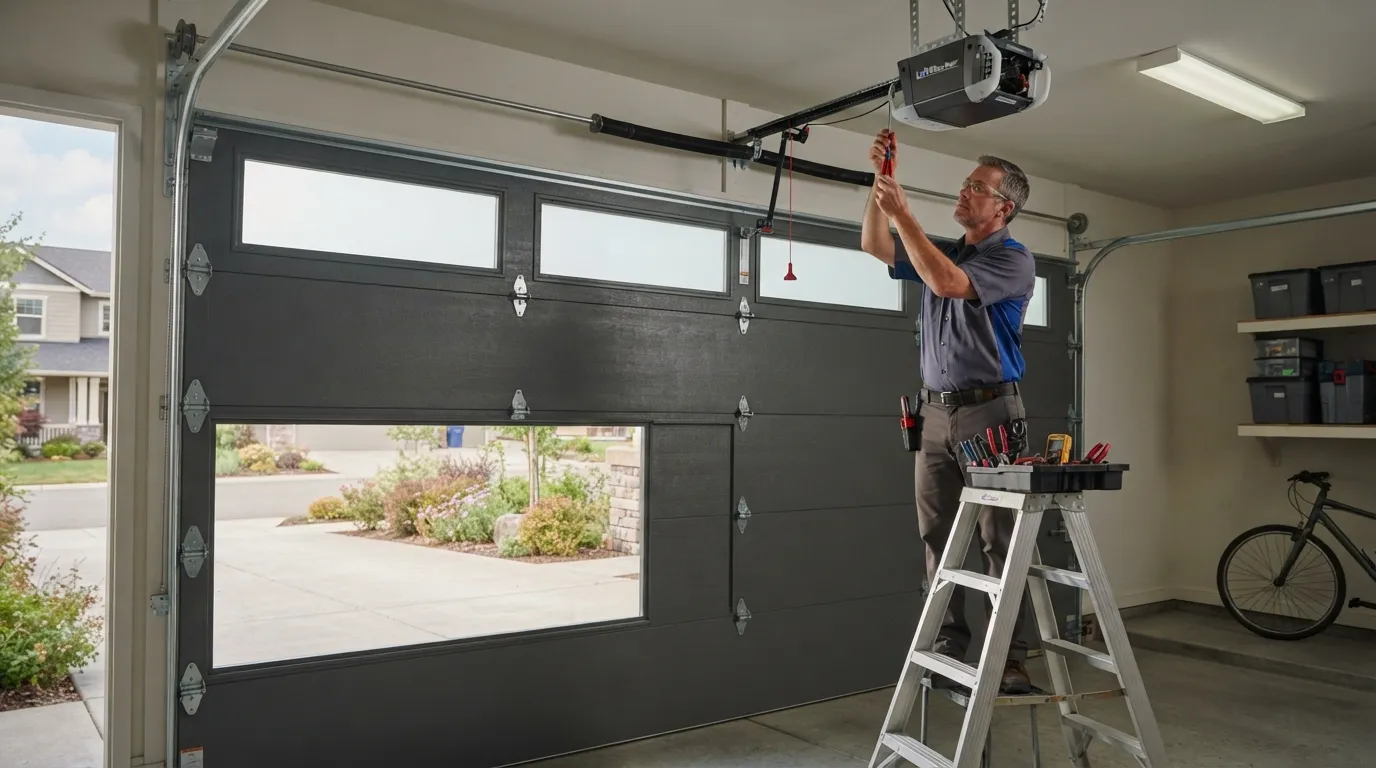
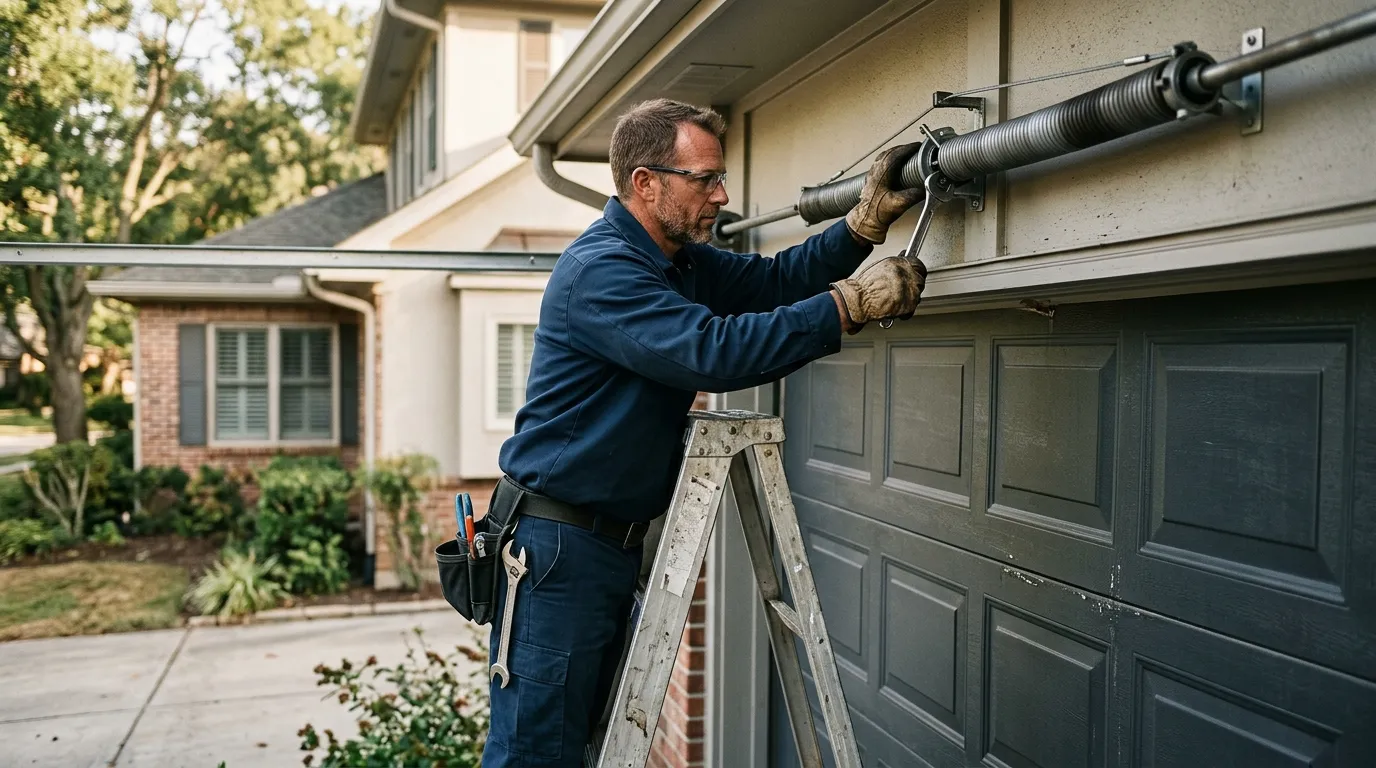
Commercial Garage Door Service, University Park in Allen

University Park, Allen

Commercial Garage Door Service, University Park

Commercial garage door repair for University Park, TX, where most buildings and business parks went up around 1987 - standard steel doors with hardware that's now over 35 years old.

Serving Allen, TXBackground-checked techsHonest, upfront pricingFast local response

Local detail

What the Repair Takes

University Park's commercial buildings mostly date to around 1987 - the era of galvanized steel sectional doors, standard-lift torsion springs sized for lighter panels, and chain-hoist openers built for a few cycles a day, not the higher-traffic use a lot of these bays see now.

  1. Read the door against its era

    A door installed then wasn't built with today's insulation requirements or the duty cycle of a warehouse running two shifts. Knowing that a bay was originally specified for a few cycles a day, not two-shift traffic, tells us what's likely fatigued before we ever touch the hardware.

  2. Check spring and track against door weight

    When we get called out, the first thing we're checking is whether the track and spring size still match the door weight, because a lot of these units have had panels swapped or added insulation since install without anyone re-rating the spring. That mismatch is the root of more service calls than a worn cable ever is.

  3. Fit the right part, or order it

    We carry standard torsion spring stock sized for that era, but if a unit's been custom-modified over the years, we may need to order a match rather than force a stock part onto hardware it wasn't built for.

  4. No forced fixes

    That's the one thing we won't do: force a fix that doesn't fit, just to close the ticket faster. On commercial hardware this old, a part that's close but wrong comes back as a callback, so we'd rather source the right one the first time.

The area

Can You Do This Yourself

A commercial door under torsion spring tension is not a DIY repair, full stop. Here is what a maintenance crew can safely handle between service calls, and the clear line where the job needs a trained tech.

Why the spring is off-limits

The spring on a typical bay door built in this era stores enough force to break bones if it's released wrong, and that risk doesn't go down because the building is small. Torsion tension is torsion tension whatever the square footage of the space it sits in.

Safe weekly upkeep

Lubricating hinges, tightening loose bolts on the track, and clearing debris from photo-eye sensors are fine for a maintenance crew to handle between service calls. We'll walk your facilities person through what's safe to check weekly - that costs nothing and it catches small issues before they become an after-hours call.

Where a tech is required

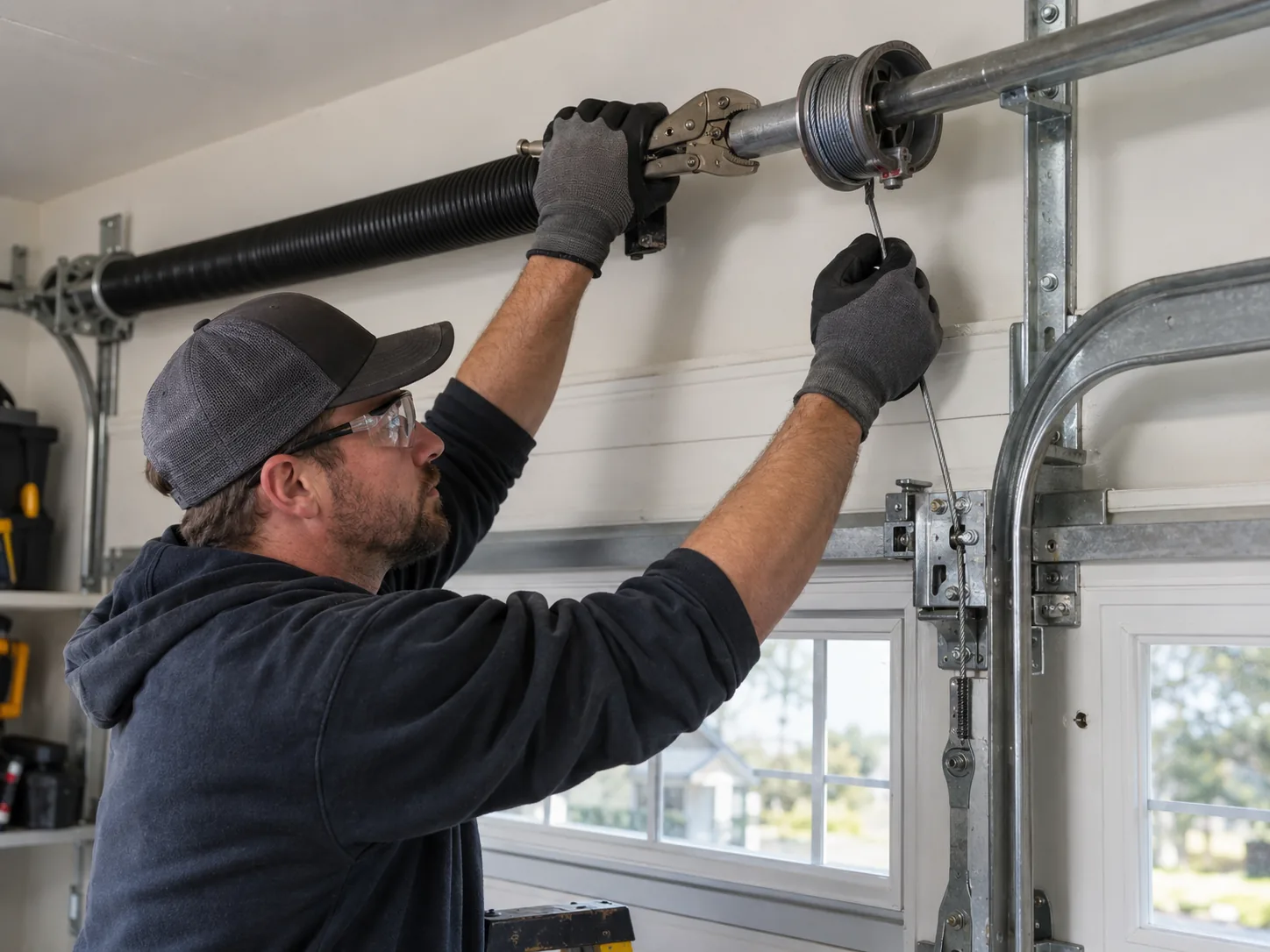
Anything involving the spring, the cable, or the opener's internal gearing needs a trained tech with the right winding bars and clamps. Those are the systems that store or transmit real force, and they're not a between-shifts fix for a facilities crew.

No phone spring adjustments

What we won't do is talk anyone through a spring adjustment over the phone. It's not a liability dodge, it's just not survivable advice to give.

What we find

What Causes It Around Here

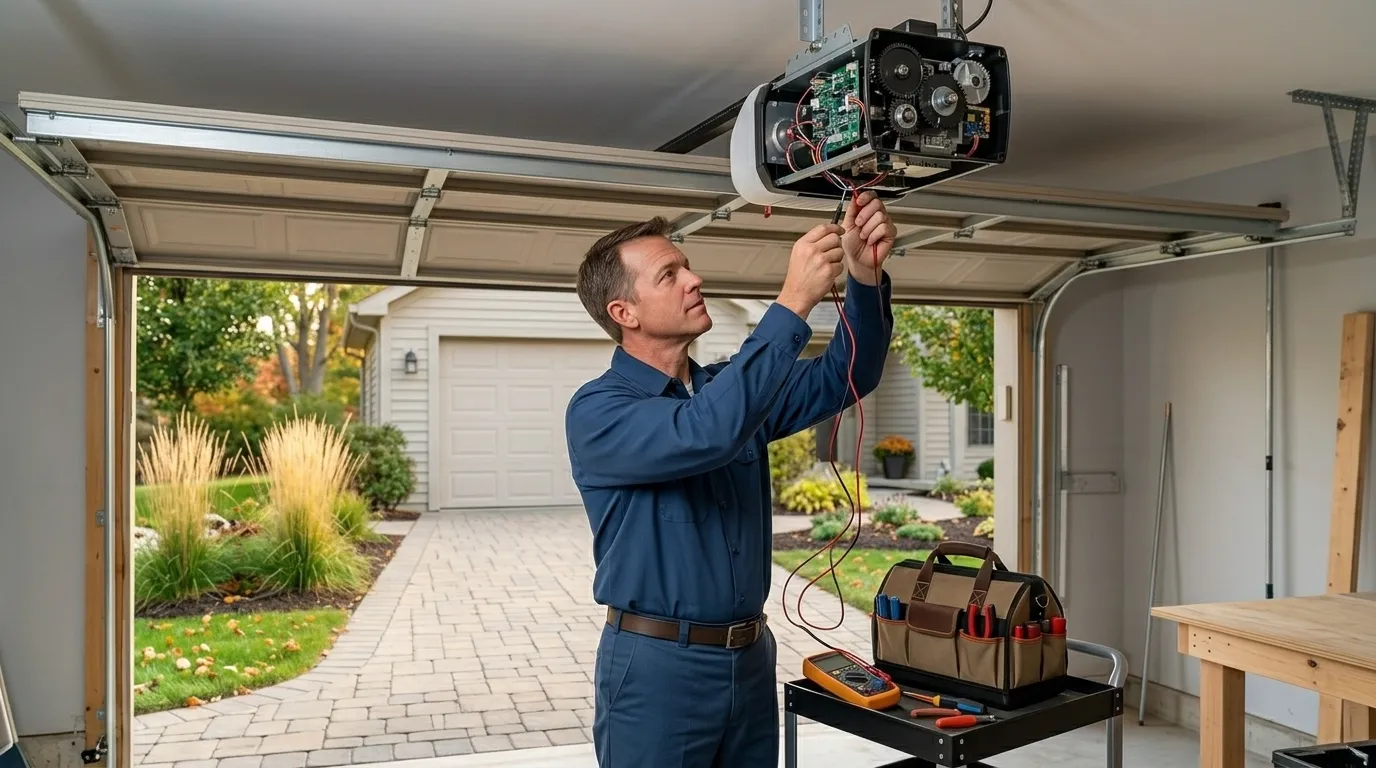
This area sits in a moderate heat climate band, which means steel doors and tracks go through real expansion and contraction across a working year, even without extreme cold. On a building with hardware installed around 1987, that decades of thermal cycling is exactly what loosens track bolts, wears roller bearings, and fatigues springs faster than the rated cycle count suggests. Add a bay door that's opened and closed dozens of times a day for deliveries, and metal fatigue shows up as a slow track drift or a spring that finally lets go on an ordinary Tuesday. We also see openers from this era running original gear sets that were never meant to handle current daily volumes - the motor still runs, but the gear is chewing itself down inside the housing, which is a noise complaint before it's a failure.

What Causes It Around Here
What It Costs

How we work

What It Costs

We don't have a set price to quote here without seeing the door - spring size, opener type, and how much of the original 1987-era hardware is still in place all change the number. What we can tell you is what drives cost up or down: a straight spring replacement on original hardware is a smaller job than swapping an opener that's outlived its gear set, and a door that's had mismatched panel replacements over the years usually needs more diagnosis time before we can quote anything firm. We'll always look at the door in person before giving a number, because guessing over the phone on commercial hardware this old tends to be wrong in both directions.

Good to know

What Can Go Wrong

None of these are exotic problems - they're what happens to steel and springs that have been doing daily work since 1987. Here are the three failures we see most on University Park commercial doors, roughly in order of frequency.

Under-rated spring

The failure we see most on buildings from this era is a spring that's been quietly under-rated for years - someone added insulation or a heavier panel at some point, the spring never got re-rated, and it finally snaps under a load it was never sized for.

Worn opener gear set

Second most common is an opener gear set worn down from decades of higher-than-designed cycle counts. It'll usually grind or stall before it fails outright, which is your window to catch it before a shut door becomes a stuck door.

Cable fraying at the drum

Cables fraying at the drum are less dramatic but just as disruptive - one broken cable and a heavy commercial door won't move at all, safely or otherwise. On a bay door this heavy, a snapped cable stops the operation cold until a tech resets it.

Time on the Job

Worth knowing

Time on the Job

University Park sits about 19 miles from our shop in Allen, so travel time is part of scheduling any call here - we're not based in town and we won't pretend otherwise. Once on site, a straight spring or cable swap on standard commercial hardware is usually a same-visit fix. Opener gear replacement or a job where the original 1987 hardware has been altered over the years can take longer, since we may need to confirm the correct replacement part before finishing rather than force a stock piece onto modified equipment. We'll give you a realistic window once we've seen the door, not before.

Questions

Common questions

Why does the age of the building matter for a garage door repair quote?

Buildings in University Park mostly went up around 1987, which set the standard for door weight, spring size, and opener gearing at install. Panels, insulation, or openers added since then often don't match the original hardware rating, which is usually why a spring fails or a gear set wears out faster than expected.

Do you have a location in University Park?

No. We're based in Allen, about 19 miles away, and we travel to University Park for service calls. We don't have a branch or depot in town, and we won't claim response times we can't back from that distance.

Can our maintenance staff handle any of this without calling you?

Yes, for basic upkeep - lubricating hinges, checking the track for loose bolts, and keeping the photo-eye sensors clear of debris. Anything touching the torsion spring, cables, or opener gearing needs a trained tech, since the spring stores enough force to cause serious injury if it's released wrong.

How old is the hardware you're likely to find on our door?

If your building dates to around when most of University Park's commercial stock went up, roughly 1987, you're likely looking at original or near-original torsion spring hardware and possibly the original opener gear set, unless a prior owner replaced it. We check the rating against current door weight before doing any spring work.

Ready when you are

Need a garage door sorted in Allen?

Allen Garage Door Co repairs and installs garage doors, springs and openers in Allen, TX and the surrounding area.

CallGet a quote