
Guide
Why Your Garage Door Is Off Track (And What's Really Behind It)
Allen's 2000s-era tract housing and moderate heat swings both play a part in why doors walk off their tracks. Here's what actually causes it and where owners go wrong.
Local detail
What to Look At First
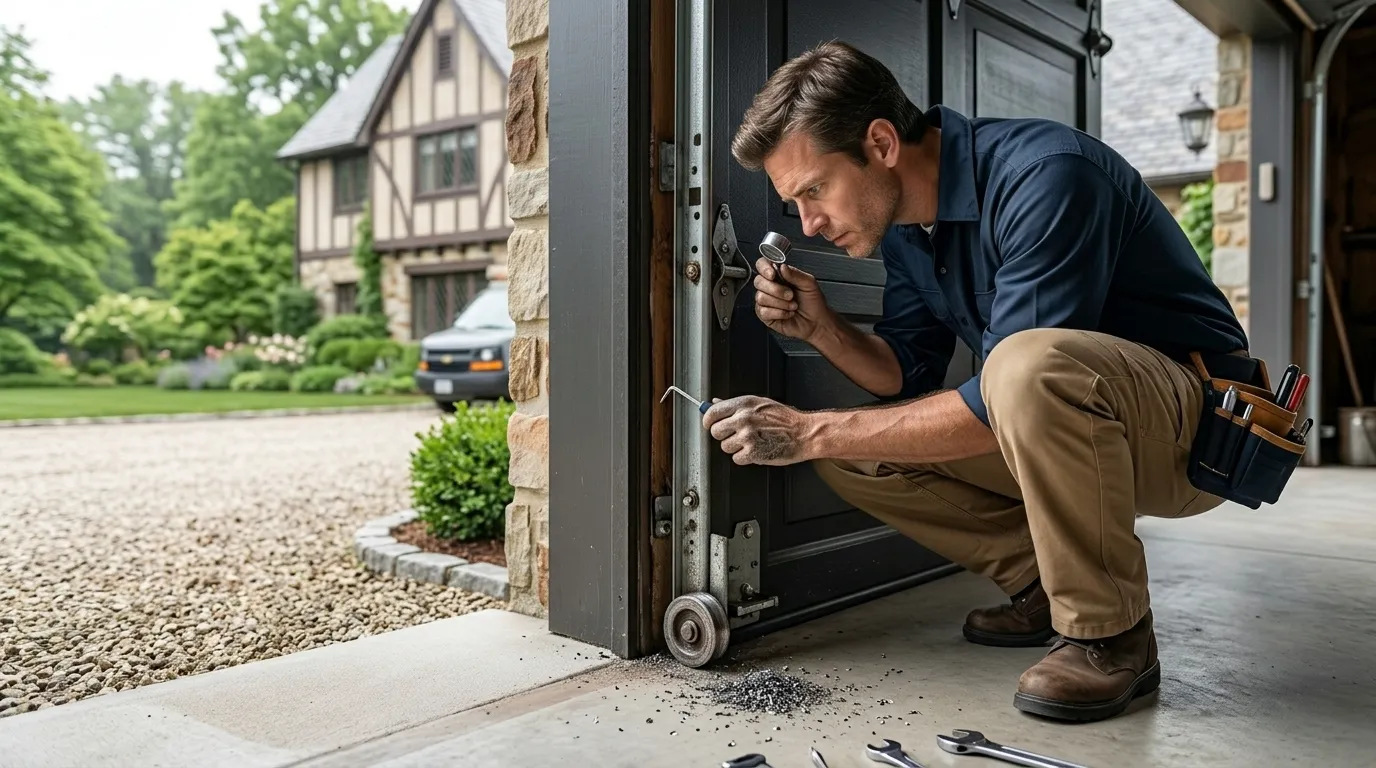
Start at the brackets, not the door itself. Most homes in Allen were built between 1971 and 2015, with the median right around 2005, which means a lot of the track hardware on the road today is the same builder-grade steel that went up with the house. That hardware was fastened to a wood jamb with lag screws, and after fifteen to twenty years those screws back out a turn or two on their own. A bracket that's even an eighth of an inch loose lets the track lean, and a leaning track is what throws rollers out of their channel.
Look for daylight between the bracket and the jamb, a track that isn't perfectly plumb when you sight up it, or a roller that's visibly riding on the edge of the rail instead of centered in it. If the door only jumps the track on one side, that side's bottom bracket is almost always the culprit, not the opener or the springs. Check that bracket before you call anyone, because it's the cheapest fix on this whole list and it's the one most owners skip.
The area
What the Weather Here Does to It
Allen falls in a moderate heat band, not the punishing extreme you get further south or west in Texas, but moderate still means real swings across a year, and steel track responds to that. A track bolted up tight in a cool January morning sits a little differently by an August afternoon, and that daily and seasonal flex works those same lag screws loose faster than it would in a climate with less swing. It's a slow process, not a single bad day, which is why the hardware in Allen loosens on a schedule tied to the calendar rather than to one storm.
This isn't dramatic damage. You won't see a bent track from one hot week. What you'll see, over a few years, is the cumulative effect: brackets a hair looser, alignment a hair worse, until one day the door catches a roller wrong and jumps. Keeping an eye on bracket tightness once a year, rather than waiting for a jump, is the practical response to a heat band that never gets extreme enough to force the issue on its own.
What we find
What Is Going On
Across the 17 named areas that make up the Allen service area, the housing stock repeats the same story: mostly 2000s construction, mostly the same era of steel roller doors and stamped-steel track that came standard on tract homes built during that boom. That consistency is useful, because it means the failure pattern is consistent too. A door doesn't go off track because of one dramatic event most of the time. It's the slow accumulation of a loosened bracket, a roller that's worn its bearing surface flat instead of round, and a spring that's lost enough tension that the door doesn't rise evenly on both sides anymore.
An uneven lift is the piece people miss. If one side of the door is lifting a fraction of a second before the other, the track on the slower side takes lateral load it was never built for, and that's what walks a roller off the rail. It's rarely the track's fault at all. The track is usually just where the problem shows up.
How we work
Where People Go Wrong
The most common mistake is forcing the door back onto the track by hand and calling it fixed. That gets the door moving again, but it doesn't address why it jumped, so it happens again, usually worse, because the bracket or bent rail that caused it the first time is still loose or still bent. The second mistake is tightening the visible bracket screws and stopping there, without checking whether the track itself has bowed, which a tightened bracket won't fix.
With median household income in the Allen service area at $110,357, replacing worn track and hardware outright is a call plenty of owners here can make instead of nursing a bent track along for another season, and on an install that's already fifteen-plus years old, that's often the more honest answer than another patch repair. One limitation worth being upfront about: if a track is visibly bent rather than just misaligned, straightening it rarely holds - replacement is the right call, not a repair, and we won't tell you otherwise to make the job smaller.
Questions
Common questions
Why did my garage door suddenly jump the track after years of working fine?
It's rarely sudden even though it feels that way. A bracket loosened by seasonal heat swings, or a roller worn from years of use, finally lets go under normal operation. Given that most Allen-area doors date to the 2000s building boom, this is often just the hardware reaching the end of its original service life at once.
Can I push the door back onto the track myself?
You can get it moving again, but that doesn't fix what caused it to jump - a loose bracket, a bent rail, or an uneven spring. Forcing it back on without checking those leaves the same problem in place, and it's also the point where fingers get caught. Worth having it looked at rather than just reset.
Does the heat here actually affect the track hardware?
Allen sits in a moderate heat band, so it's not extreme, but the daily and seasonal expansion and contraction of steel track still works lag screws loose over years. It's a slow, cumulative effect rather than storm damage, which is why annual bracket checks catch it before a jump happens.
Is it worth repairing an old track or replacing the whole thing?
If the track is just misaligned from a loose bracket, tightening it usually holds. If it's visibly bent, straightening rarely lasts, and on hardware that's already fifteen-plus years old - common across the Allen area's 2000s-era housing stock - full replacement is usually the more durable call.
Ready when you are
Need a garage door sorted in Allen?
Allen Garage Door Co repairs and installs garage doors, springs and openers in Allen, TX and the surrounding area.