
Hums but doesn't move
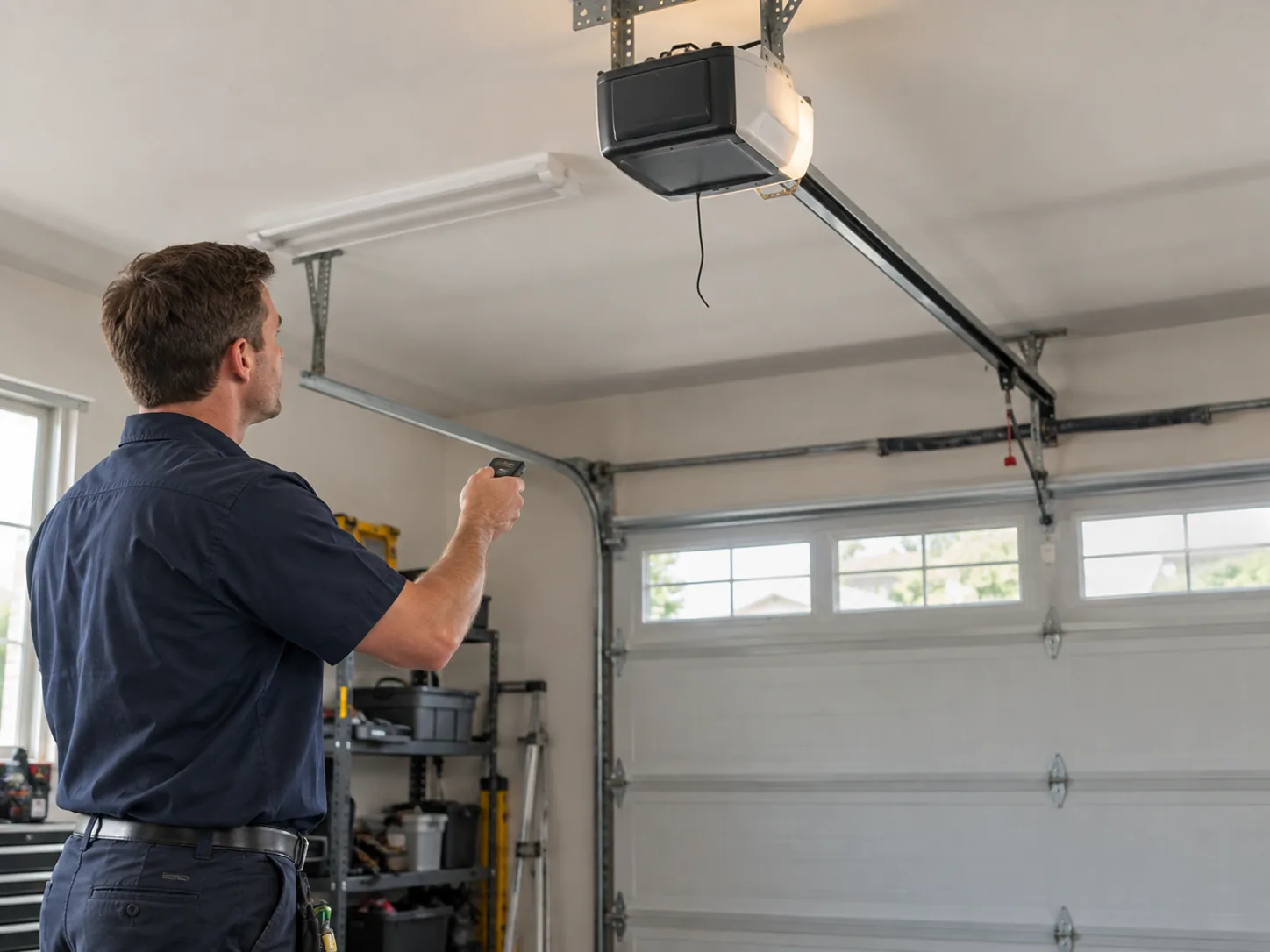
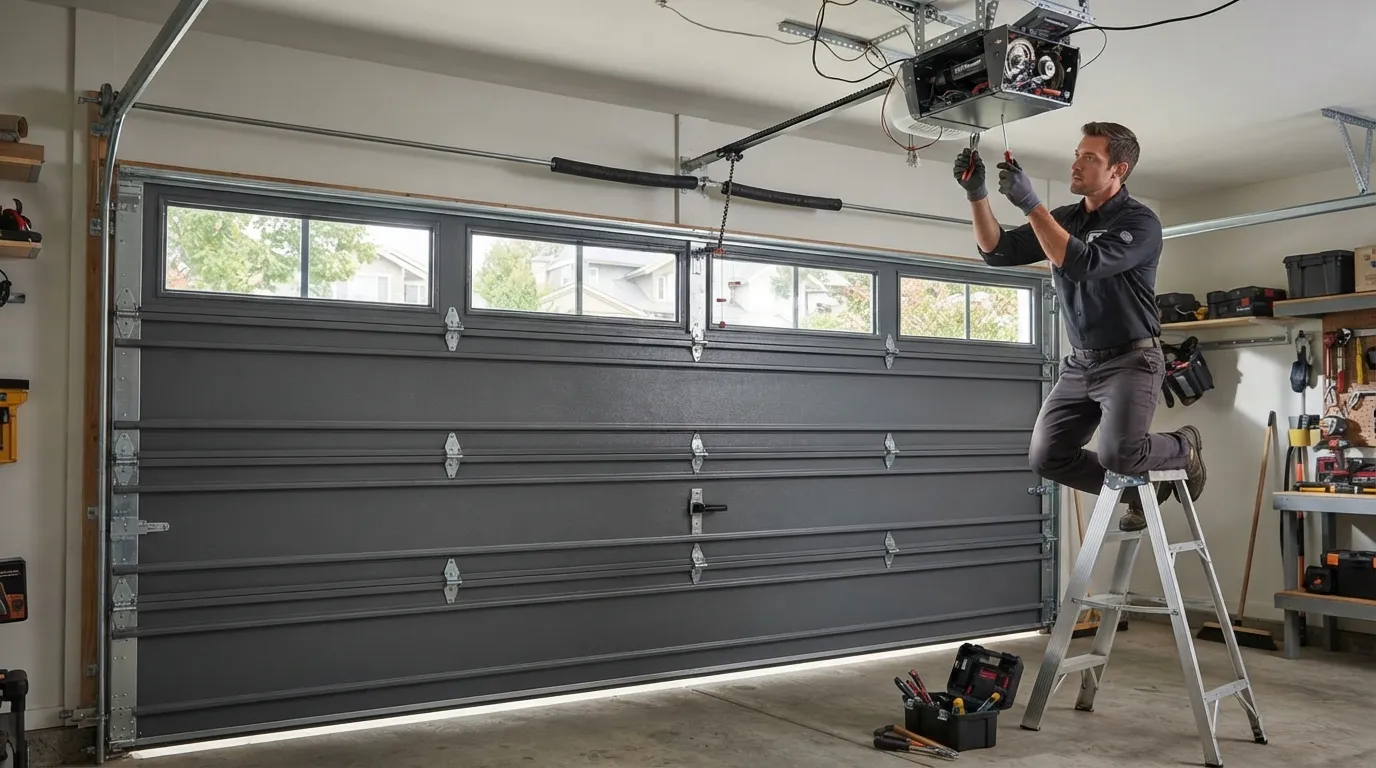
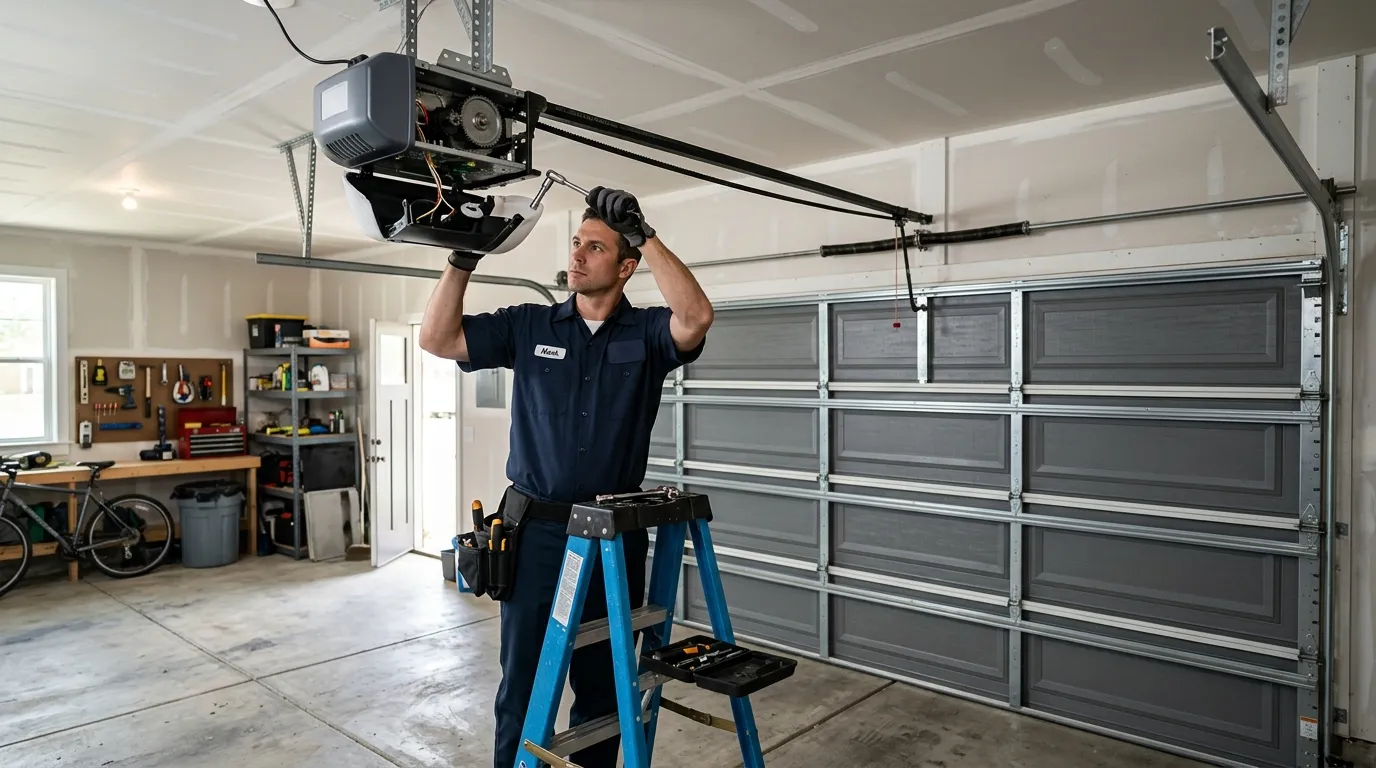
If the opener hums but the door doesn't move, that's usually the gear or the drive belt, not the motor windings. On a chain or belt drive unit that's original to a 2005 build, that drive gear is a common wear point at this age.
Parker, Allen
Parker homes built around 2005 still run original openers. We drive in from Allen, 4 miles out, to fix chain drives, dead sensors and worn logic boards.
Local detail
Parker sits about 4 miles from our shop in Allen, so a call here doesn't mean a long wait for a truck to show up. We don't keep a branch in Parker - we run the job from Allen - but the drive is short enough that it doesn't change how we schedule the day. Tell us the opener brand if you can read it off the motor housing, and whether the door still moves on manual release. That one detail (does the door move by hand) tells us in thirty seconds whether we're looking at the opener itself or a spring problem wearing an opener's clothes. With roughly 1,553 households in Parker, most of them built in the same stretch of years, we see the same handful of failures on repeat here, which makes the phone diagnosis faster than it would be in a neighborhood with a mixed building stock.
The area
Most Parker openers we get called out for are original to the house - installed when the home was built around 2005 and never swapped since. Here is how a repair visit works through the unit before anyone touches the motor.
Most Parker openers we get called out for are original to the house - installed when the home was built around 2005 and never swapped since. Twenty years is a long service life for a chain or belt drive motor, and it's well past the point where the safety-reversal sensors and the main circuit board are working the way they did new.
A repair visit usually starts with testing the sensors, the wall control wiring, and the logic board before we touch the motor itself, because a $30 sensor eye replacement gets mistaken for a dead opener more often than you'd think.
If the motor's gear set has stripped or the board has failed outright, replacement usually makes more sense than a repair - parts for a 20-year-old unit are getting hard to source, and we won't string a homeowner along chasing a board nobody stocks anymore. That's the honest limit here: some of these units are past fixing well.
What we find
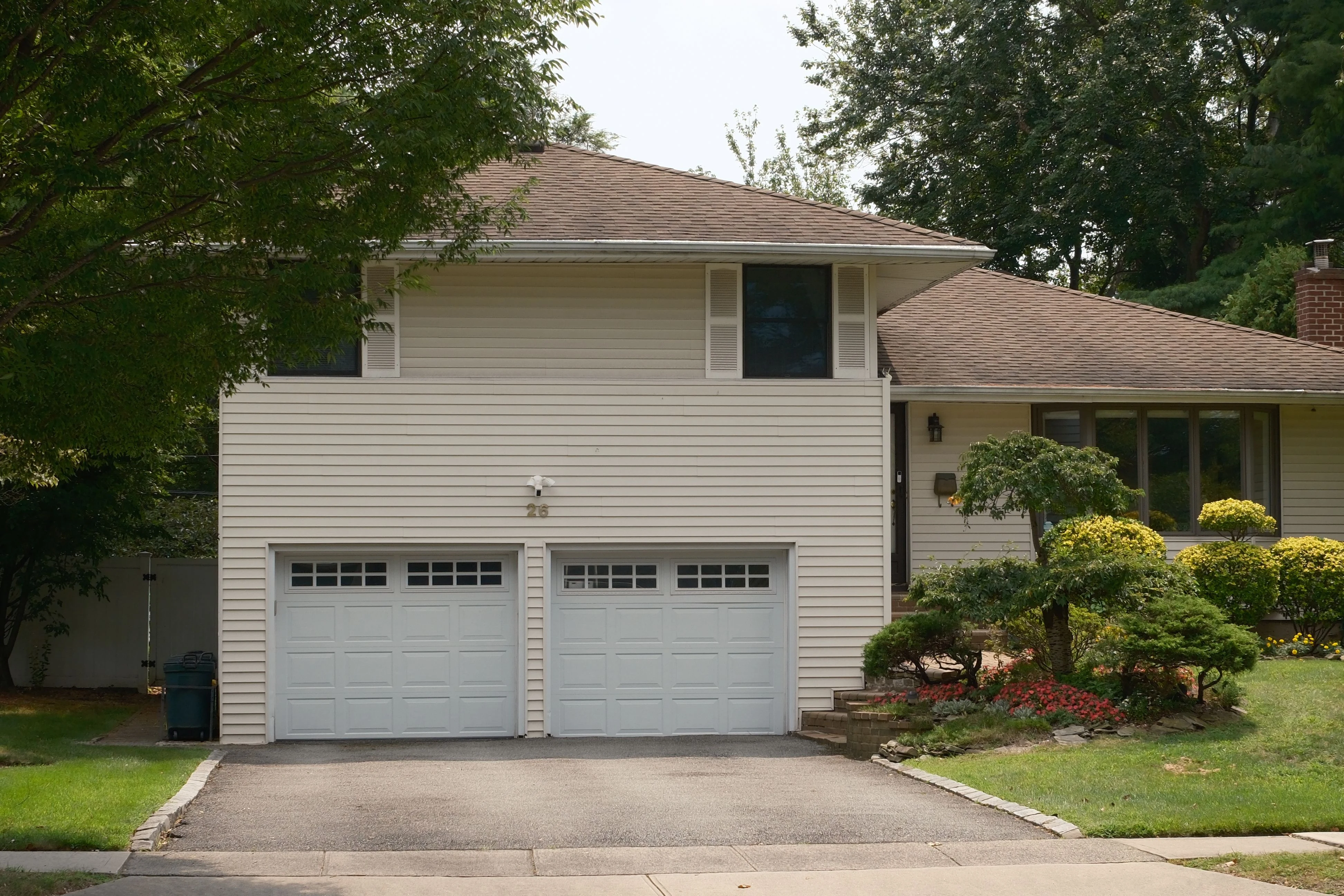
Parker's housing stock is tight - most of it went up in the same building wave, with a median year built around 2005, which means most openers in town are the same age and hitting the same failure points within a few years of each other. The service area's climate band is moderate heat, not the kind of extreme swing that cooks a motor housing outright, but two decades of garage heat cycling still dries out gaskets, stiffens grease in the gear housing, and loosens the plastic drive gear that almost every mid-2000s opener used. We also see original remotes and keypads on their last legs - the rolling codes on units this old sometimes won't sync with newer replacement remotes, which means a full board swap instead of a five-minute fix. None of this is unique drama; it's just what happens to a motor that's been running since a specific year and never been touched.
How we work
The way an opener misbehaves usually points straight to the part. Here is how the common Parker complaints read on a 20-year-old unit - and why some owners skip the patch entirely.
If the opener hums but the door doesn't move, that's usually the gear or the drive belt, not the motor windings. On a chain or belt drive unit that's original to a 2005 build, that drive gear is a common wear point at this age.
A door that reverses partway up or won't close all the way is almost always the sensor eyes - either misaligned or just failing with age, and on a house this old the sensors themselves may be original.
A remote that used to work fine and now needs three or four presses points to a weakening logic board rather than a dead battery, especially on units old enough to predate the newer rolling-code standards.
Given Parker's median household income of $216,179, we also get more calls asking about full replacement rather than patch repairs - homeowners here often decide a 20-year-old unit isn't worth nursing along once the board goes, and ask us to just put in a new opener while we're already on site.
Questions
If your house in Parker was built around 2005 and the opener has never been replaced, it's about 20 years old. At that age, a board or gear failure often costs more to source parts for than a new unit costs installed. We'll tell you straight which way the math points before we start any work.
No. We run out of Allen, about 4 miles from Parker, and drive to you for the call. There's no depot here and we won't claim one - the short distance just means it doesn't slow down scheduling.
On openers from the mid-2000s, that's usually a weakening logic board rather than a battery issue, especially since many units from that era used earlier rolling-code systems that degrade with age. It's worth a diagnostic before you buy a new remote that won't sync anyway.
Because so much of the housing here went up in the same few years, centered on 2005. Openers installed at that time are all reaching the same 20-year mark together, which is why we see clusters of the same gear and board failures across the same neighborhoods.
Explore more
Ready when you are
Allen Garage Door Co repairs and installs garage doors, springs and openers in Allen, TX and the surrounding area.