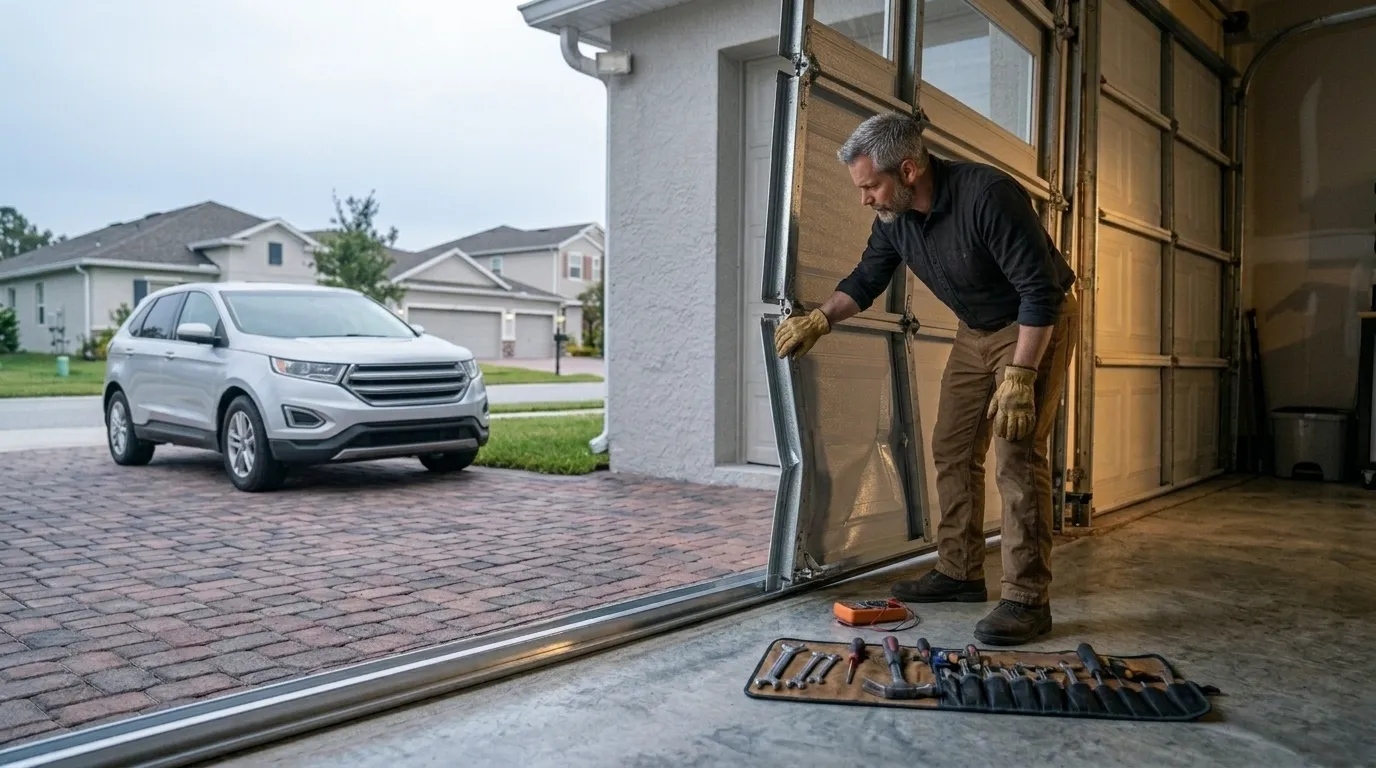
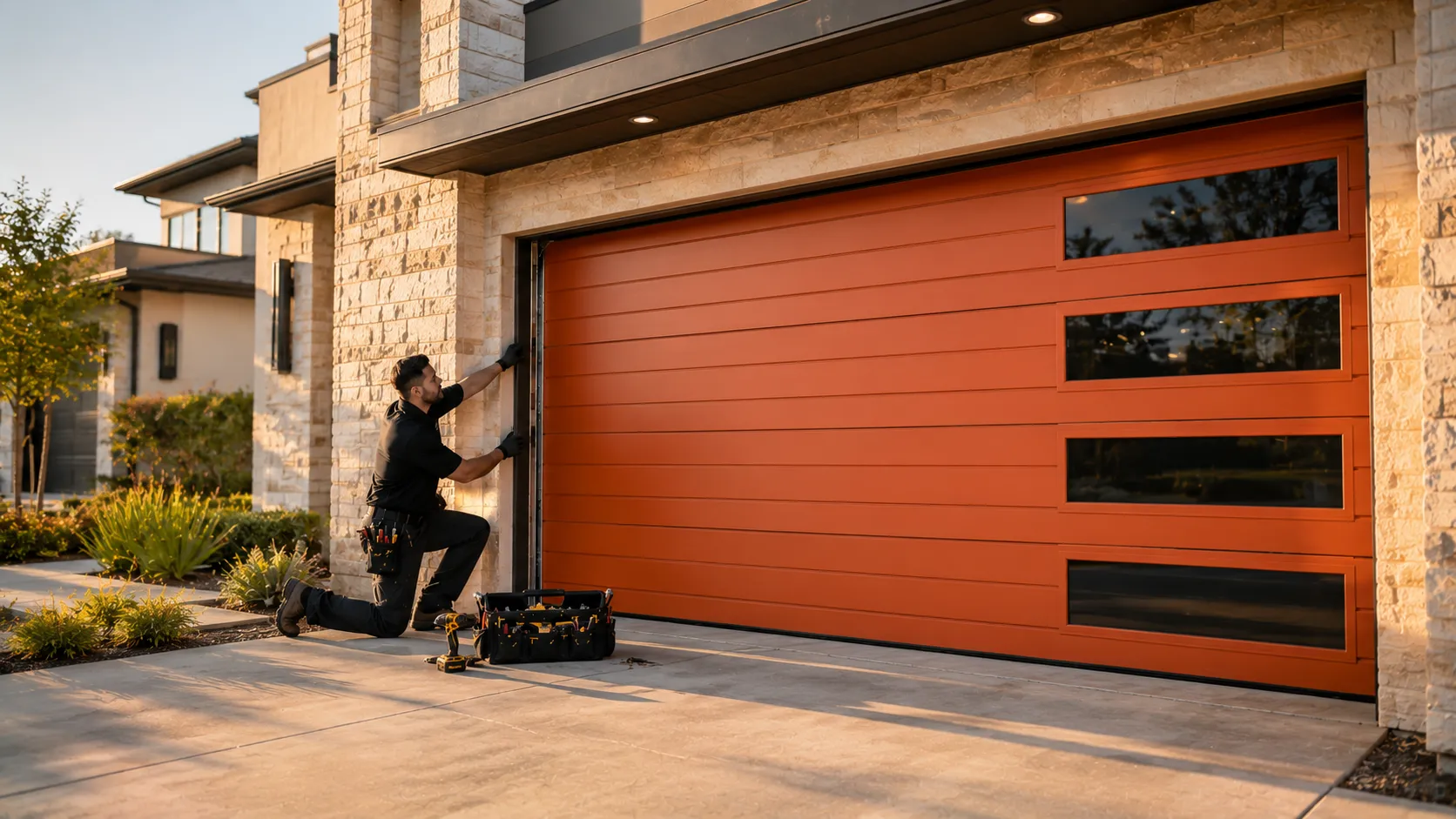
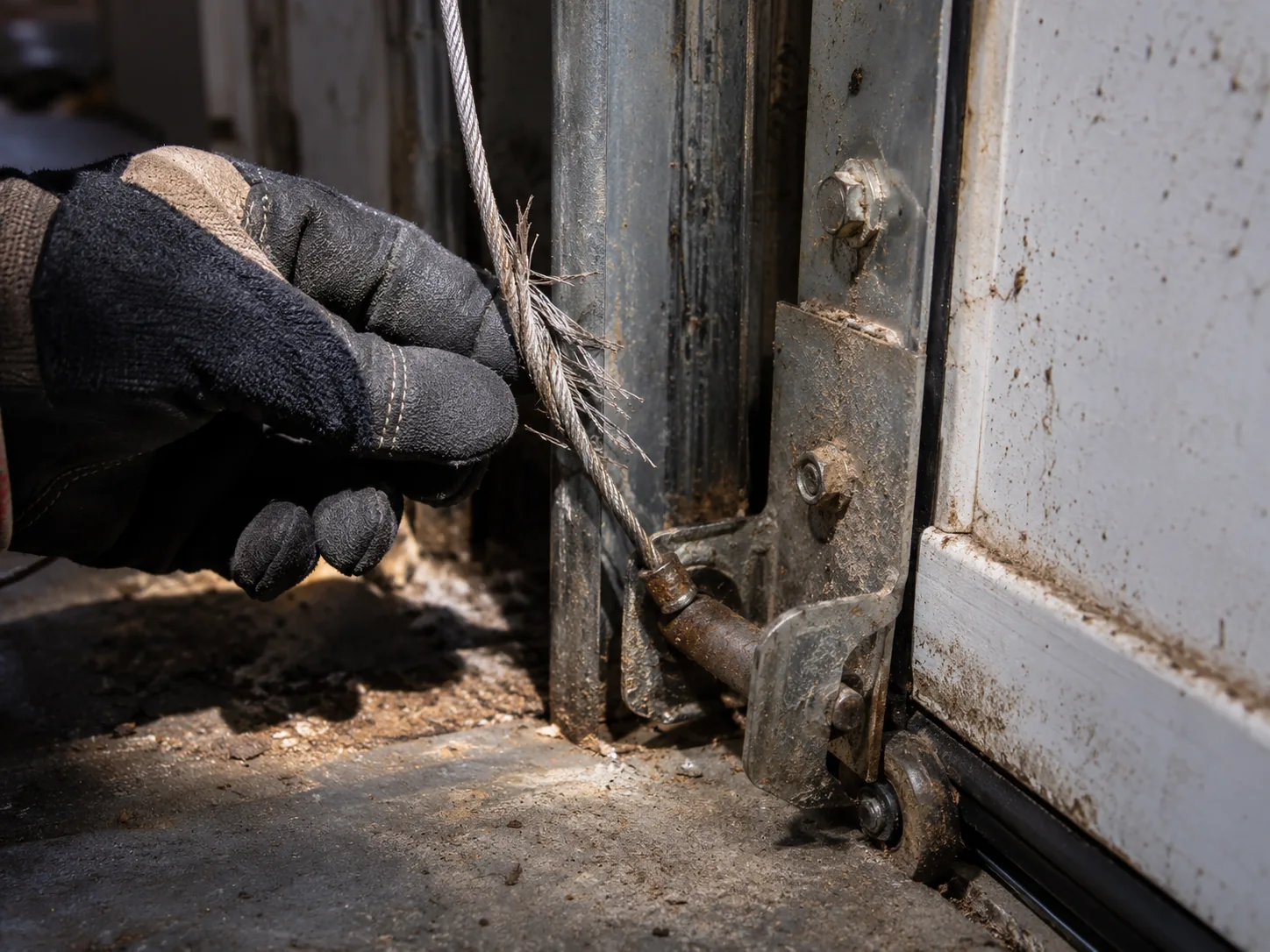
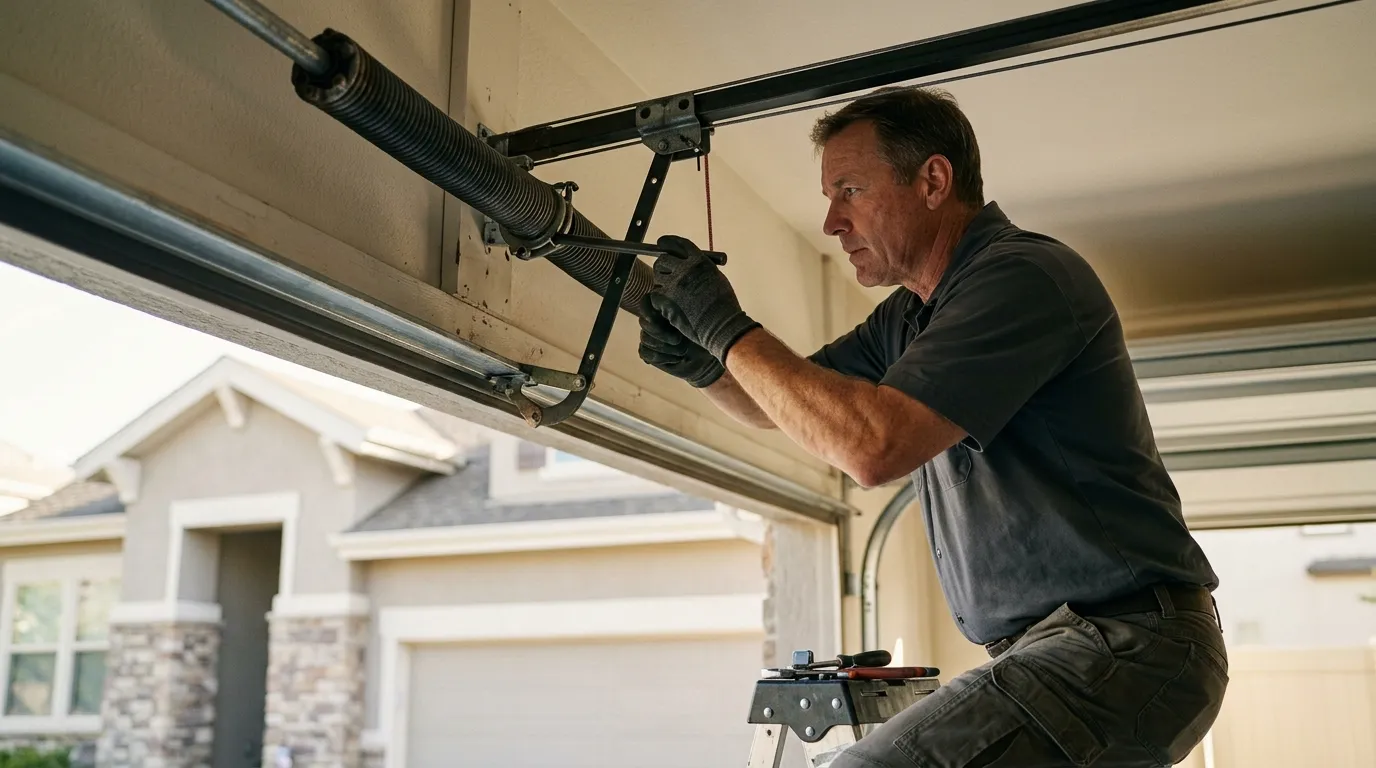
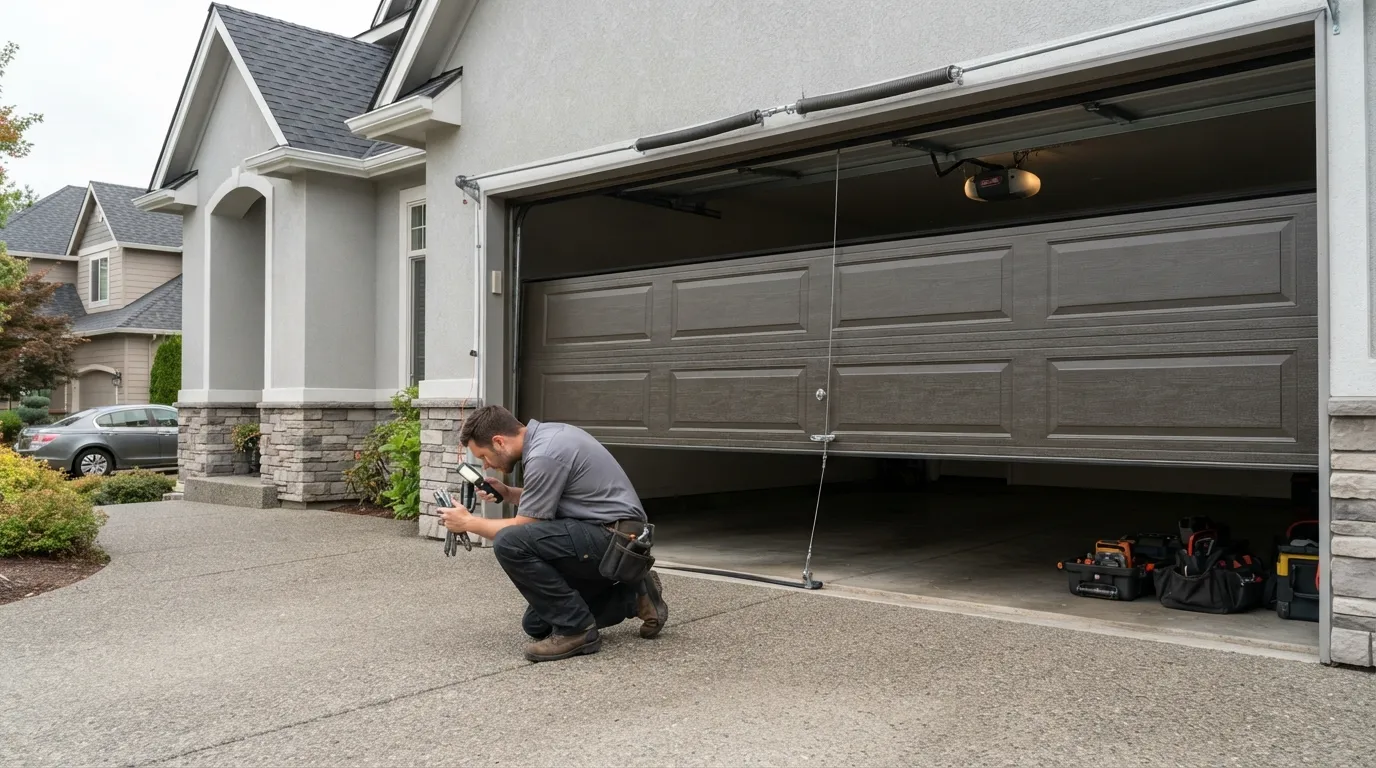
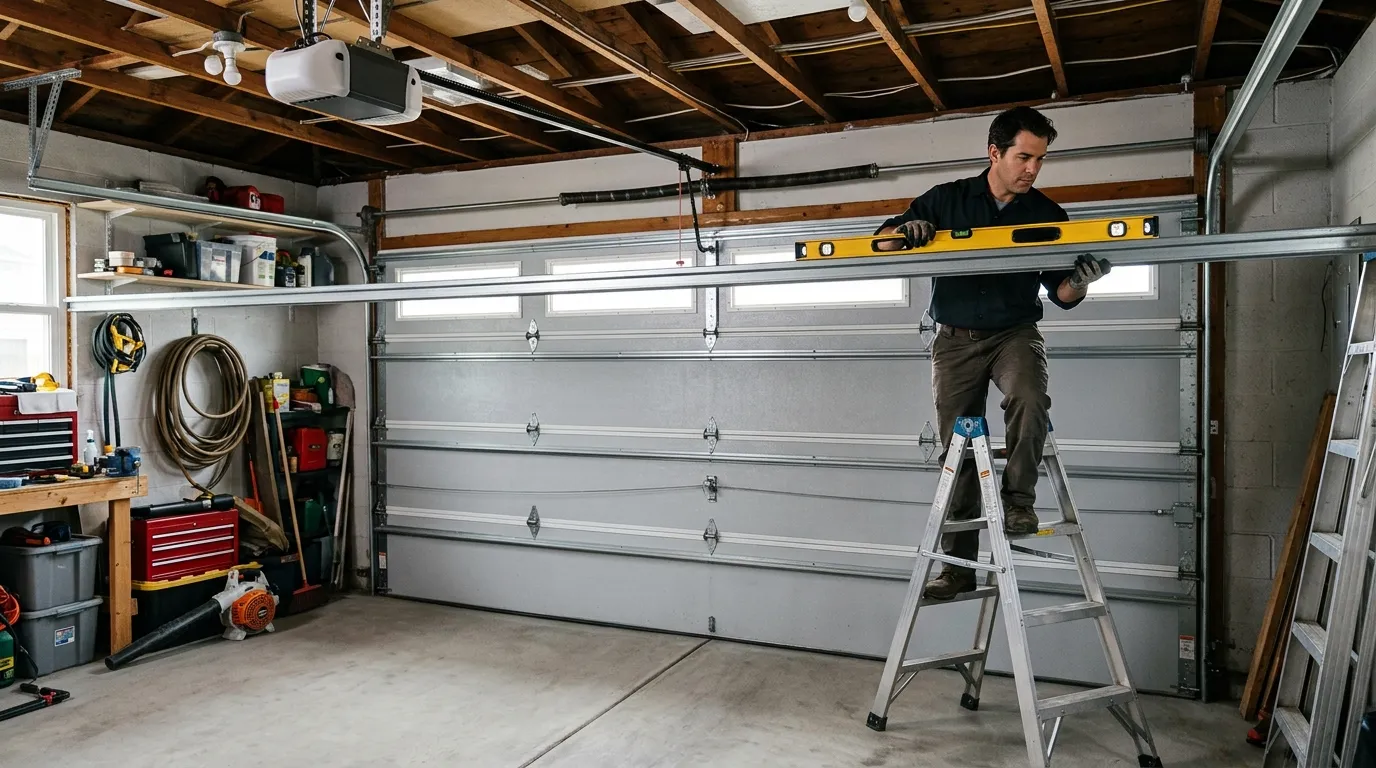
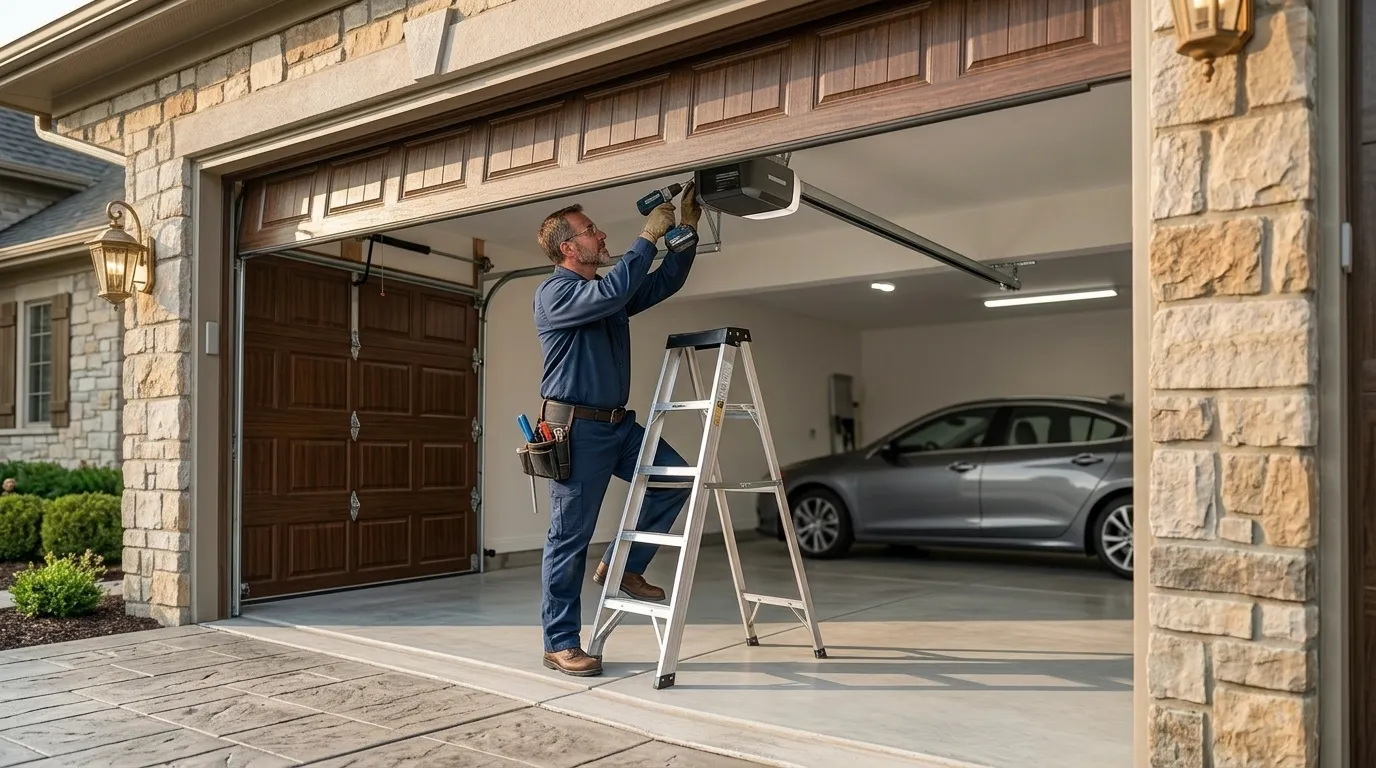
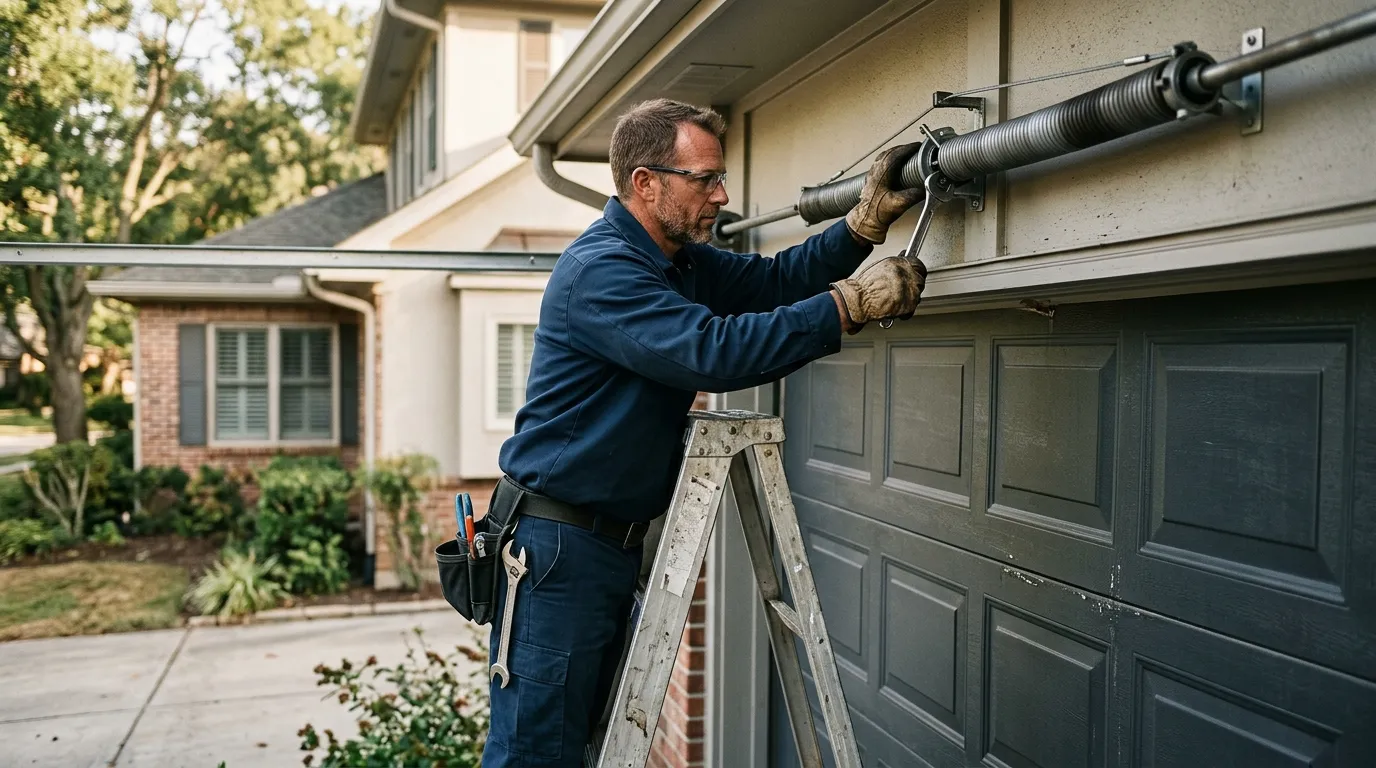
Heat in this part of Texas runs in the moderate band rather than extreme, so track failure here is rarely a single dramatic weather event. It's slower than that. Aluminum and steel track sections expand and contract through the day, and over two decades that cycling works the mounting bolts loose at the jamb bracket, a few thousandths at a time, until one side of the track sits a hair out of parallel with the other. On a heavier insulated door, that small gap is enough for a roller to jump the rail. And Murphy's median household income of $165,109 runs well above the $110,357 median across the wider service area, which tends to track with larger, better-insulated two-car and three-car doors rather than the light single-panel doors common in older, lower-cost stock. Heavier doors put more stress on original hardware that was never resized for the weight. Add a bent bottom bracket from a car bumper, or a broken cable that lets one side of the door drop while the other holds, and the door comes off the track on that side. None of this needs a storm. It just needs twenty years and gravity.